open data

Photo of Dr Jessica Espey with Emily Cole at the QRMG Annual Lecture, 2026.

From local knowledge to global decisions: advancing inclusive data science

How do we make sure data reflects the people and places it is meant to represent? And how can cities make better decisions in an increasingly complex world? These were some of the questions explored by Dr Jessica Espey, Deputy Director (Research) at WorldPop, during recent engagements at the Royal Geographical Society Annual Conference in […]

From local knowledge to global decisions: advancing inclusive data science Read More »

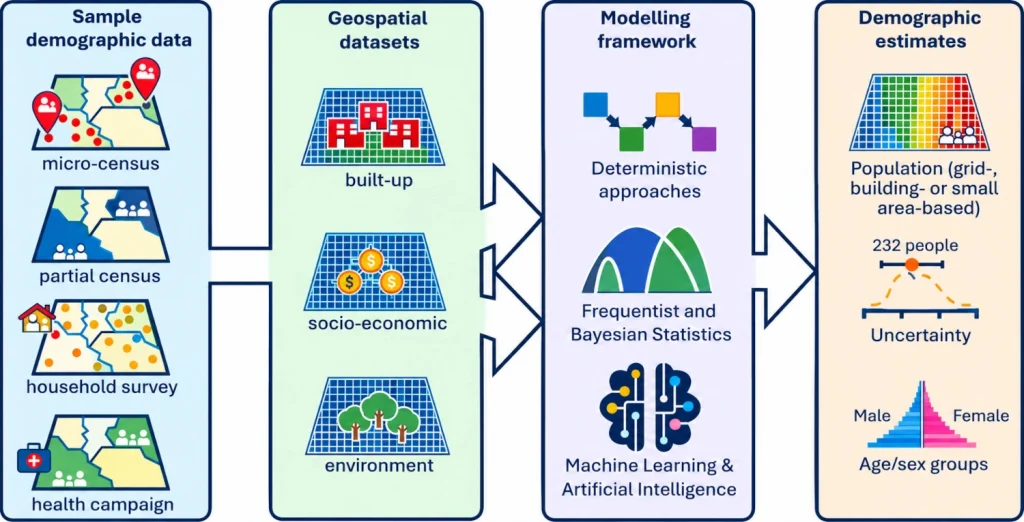
Graphic showing components of the bottom–up approach to small area population estimation.

New Ways to Count Populations When the Census Falls Short

Reliable population data is one of the foundations of effective decision-making. Governments use it to plan schools, hospitals and infrastructure. Humanitarian agencies rely on it to deliver aid. Health organisations need it to estimate how many vaccines, medicines and health workers are required in different communities. Yet for many countries, obtaining accurate and up-to-date population

New Ways to Count Populations When the Census Falls Short Read More »

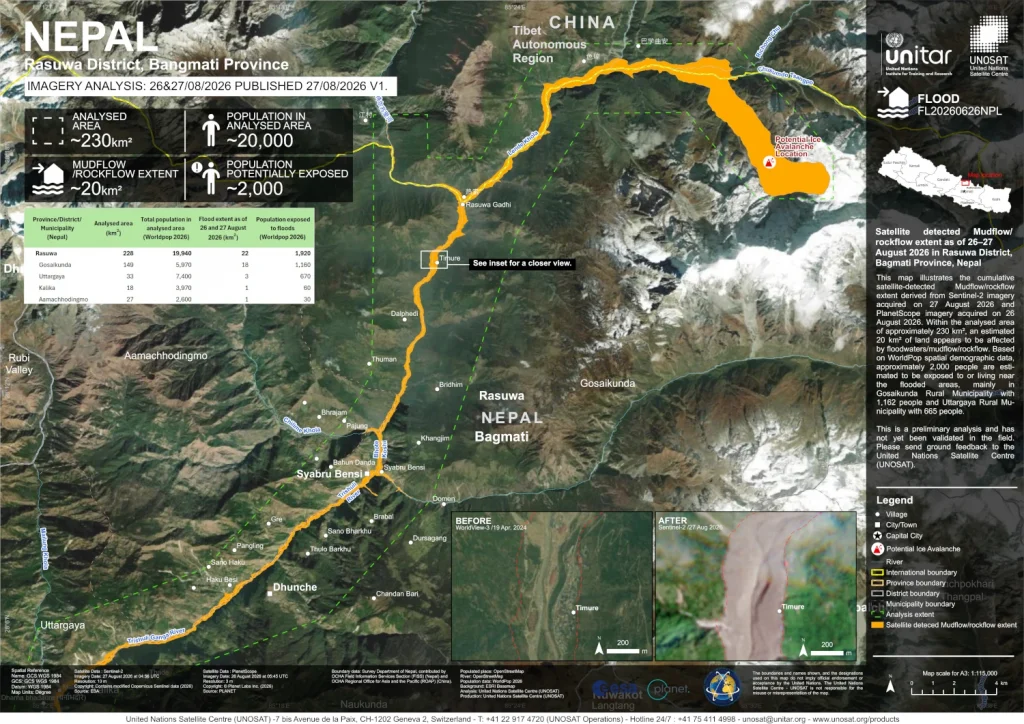
Map showing satellite detected Mudflow/ rockflow extent as of 26–27 August 2026 in Rasuwa District, Bagmati Province, Nepal.

Open Data Aiding Relief Efforts in Nepal and Tibet

Following recent devastating mudflows in Nepal’s Rasuwa District, WorldPop’s open spatial demographic data has been critical in rapidly assessing the human impact of the disaster.   By combining satellite imagery of the 20 km² affected area with WorldPop’s open demographic datasets, the preliminary analysis published by UNOSAT on ReliefWeb estimated that approximately 2,000 people were exposed

Open Data Aiding Relief Efforts in Nepal and Tibet Read More »

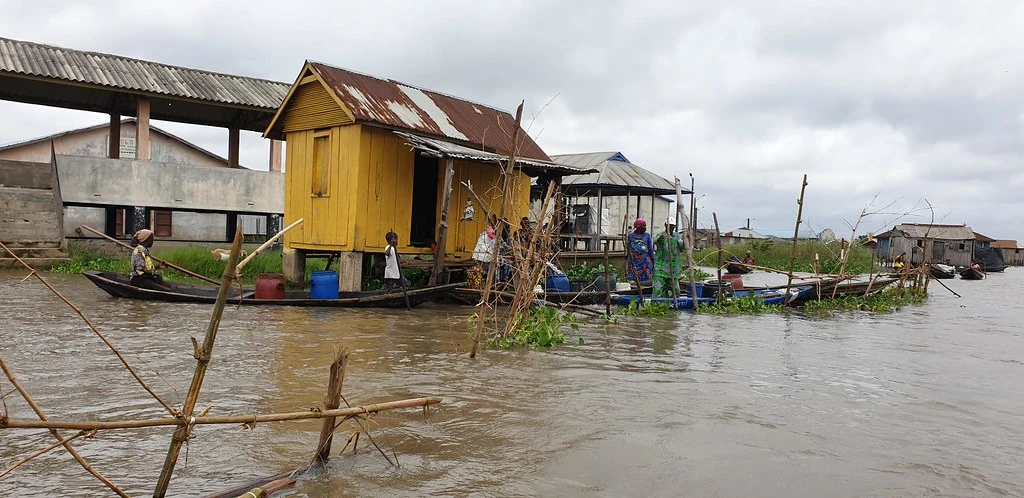
Photo of a stilt village in Benin

Local evidence can improve global decision-making

Répondez à notre enquête de satisfaction et contribuez à façonner la suite An international research team led by WorldPop Deputy Director (Research), Dr Jessica Espey, argues that better global decision-making needs stronger local evidence from low- and middle-income countries.  The study, published this week in Evidence & Policy, looks at how evidence shapes policy in

Local evidence can improve global decision-making Read More »

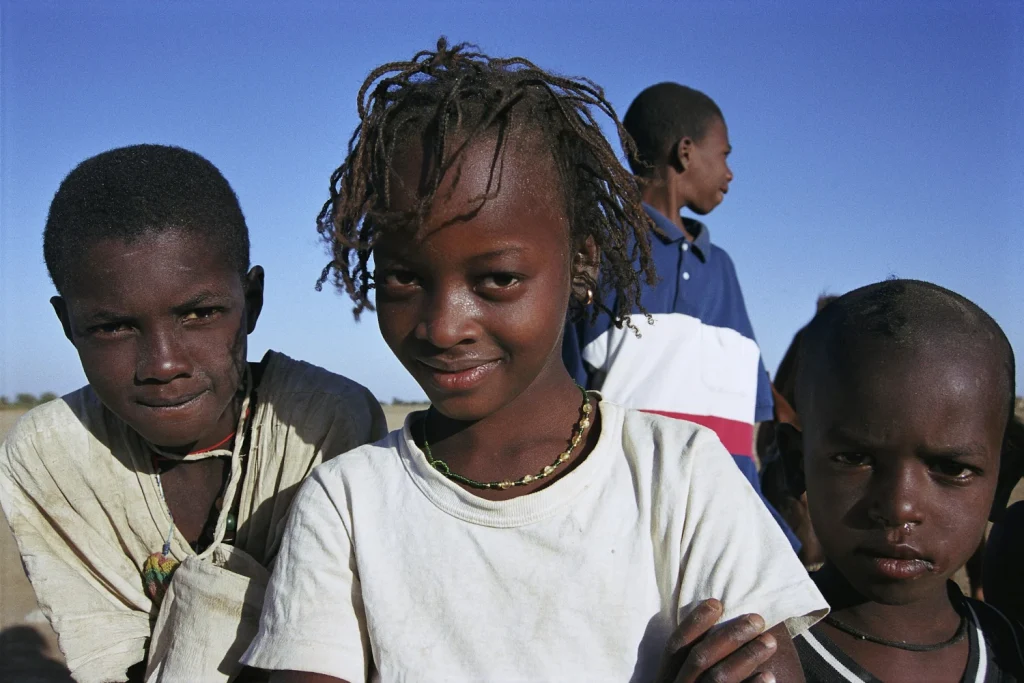
Photo of four children in a small village in Senegal

The World Isn’t Aging Evenly. How National Averages Are Hiding the Story.

Répondez à notre enquête de satisfaction et contribuez à façonner la suite WorldPop Director Professor Andy Tatem argues that national averages can hide big differences between communities, making detailed local population data essential for ensuring schools, healthcare, housing, and other services are delivered where people need them most. Many news stories on global population trends

The World Isn’t Aging Evenly. How National Averages Are Hiding the Story. Read More »

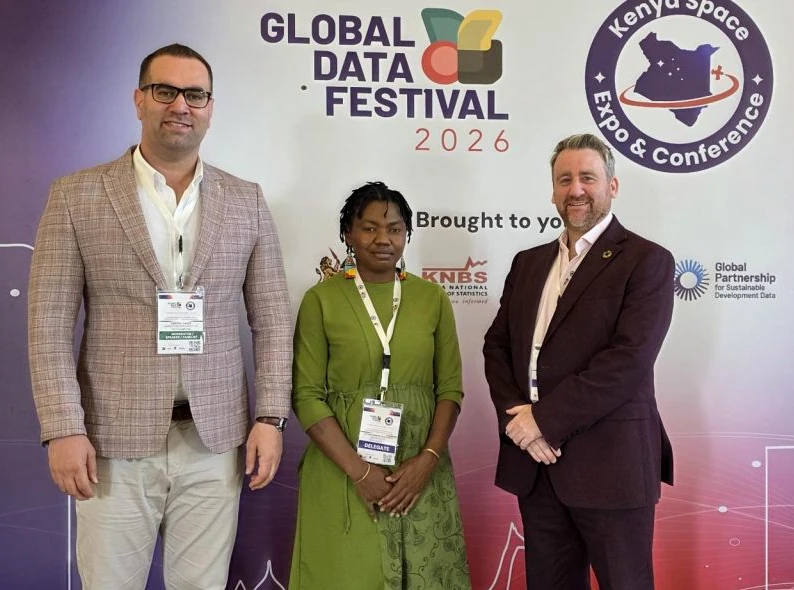
Photo of Dr Sarchil Qader, Tuli Amutenya and Ian Coady at the 2026 Global Data Festival in Nairobi.

WorldPop Experts Pioneer the Future of Population Intelligence at 2026 Global Data Festival

Take Our Survey and Help Shape What Comes Next During the 2026 Global Data Festival in Nairobi, WorldPop researchers showcased how high-resolution geospatial mapping and artificial intelligence are transforming the way nations count and improve outcomes for their citizens. The event, which was held jointly with the Kenya Space Expo & Conference, brought together international

WorldPop Experts Pioneer the Future of Population Intelligence at 2026 Global Data Festival Read More »

Screen capture of graphic from ArcGIS Scene Viewer of Global Projected Count of Children Under Age 5 for 2030 derived from 1-km cell size WorldPop Global2.

WorldPop Global 2 Demographic Data Now in ArcGIS Living Atlas 

Take Our Survey and Help Shape What Comes Next Access to high-quality demographic data is often one of the biggest barriers to evidence-based decision-making. Whether supporting health service planning, humanitarian response, infrastructure investment, or climate adaptation, organisations need population data that is both current and spatially detailed.  That is why we are pleased to see

WorldPop Global 2 Demographic Data Now in ArcGIS Living Atlas  Read More »

Photo of Child fetching water in northwest Somalia

WorldPop Open Data Helps UNICEF Pinpoint Children’s Climate Vulnerability

Take Our Survey and Help Shape What Comes Next UNICEF is launching the Global Child Hazard Database (GCHD) at London Climate Action Week later this month. The GCHD initiative provides globally standardised datasets on children’s exposure to overlapping climate and environmental risks. The project aims to provide timely and accurate data to support informed decision-making and policy advocacy for the world’s youth.  Central to this

WorldPop Open Data Helps UNICEF Pinpoint Children’s Climate Vulnerability Read More »

Graphic showing geographic distribution of median area sizes of subnational units in the input population data for the Global Subnational Demographic Dataset 2010–2030

Mapping a World in Transition: New Study Lays Foundation for WorldPop Global 2 Population Data 

Take Our Survey and Help Shape What Comes Next WorldPop researchers at the University of Southampton have published the methodology behind the massive subnational dataset used to power Global 2 – our latest high-resolution mapping of the human population.  The new article, published as a preprint in VeriXiv, details how the team harmonised and projected population data for more than 716,000 subnational administrative units across

Mapping a World in Transition: New Study Lays Foundation for WorldPop Global 2 Population Data  Read More »

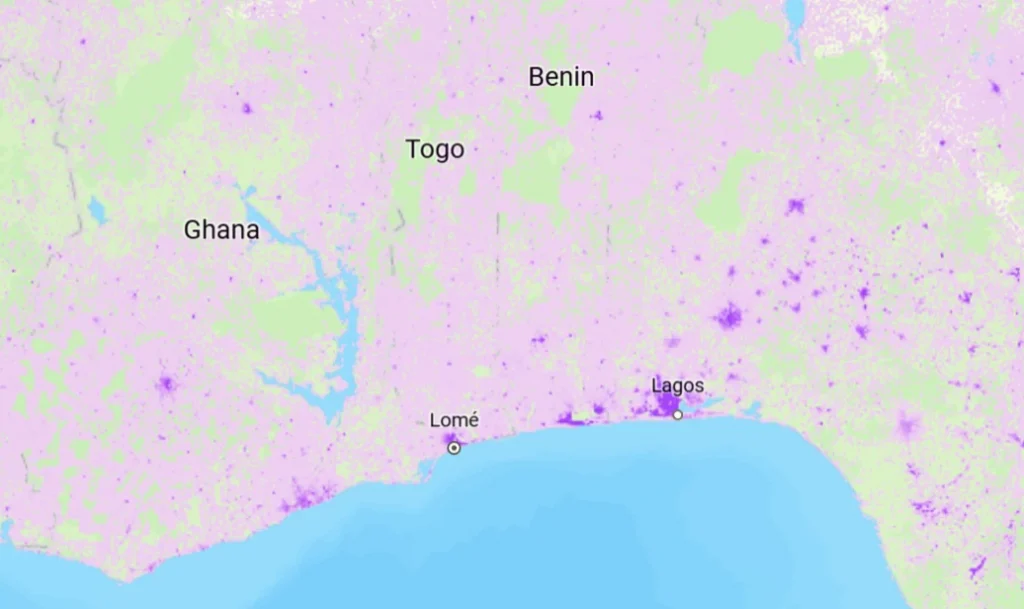
Screen capture of Lagos, Nigeria population pyramid.

Open-access WorldPop data reveals hidden demographic trends across 10,000 cities

Take Our Survey and Help Shape What Comes Next High-resolution data from WorldPop is uncovering critical demographic shifts in over 10,000 cities that national averages often hide. The study, led by Dr Andrew Zimmer and published in Nature Cities, provides a globally consistent view of urban change between 2000 and 2020.  Researchers used WorldPop’s anonymised and aggregated gridded population distributions to track age and sex

Open-access WorldPop data reveals hidden demographic trends across 10,000 cities Read More »