
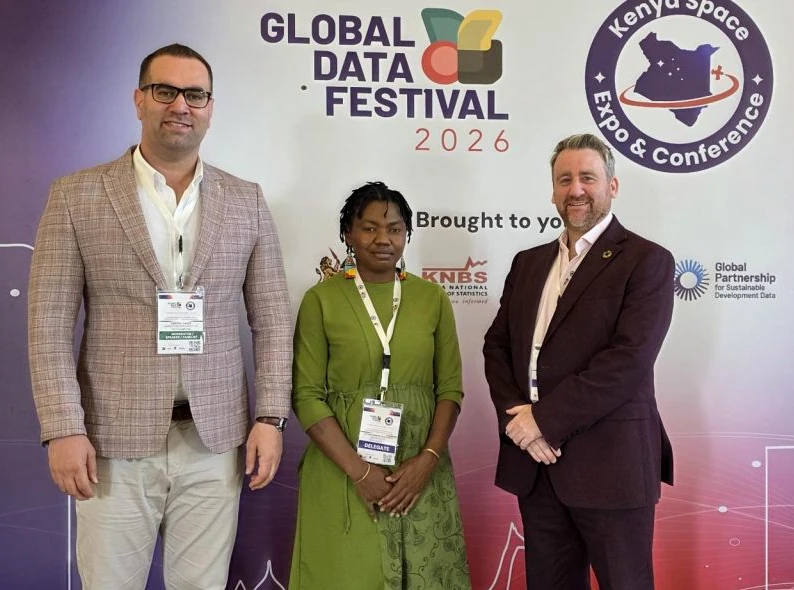
During the 2026 Global Data Festival in Nairobi, WorldPop researchers showcased how high-resolution geospatial mapping and artificial intelligence are transforming the way nations count and improve outcomes for their citizens.
The event, which was held jointly with the Kenya Space Expo & Conference, brought together international experts to address the critical need for timely, inclusive and disaggregated data in decision-making. As national statistical systems in low- and middle-income countries face increasing budget strains and declining survey response rates, WorldPop’s experts demonstrated how “population intelligence” can fill vital data gaps.
Digitising the 2030 Census Round
Senior Research Fellow, Dr Sarchil Qader, contributed to a high-level panel exploring “The Future of Census: Digitisation and Global Pathways to the 2030 Round”. The discussion focused on how geospatial technologies and population modelling are evolving census operations from simple data collection to advanced analysis.
Dr Qader, comments: “These conversations are critical to ensuring more inclusive, accurate, and timely population data systems, which underpin everything from service delivery to disaster preparedness and sustainable development”.
Bridging the Data Gap with PopIntel
A highlight of the festival was the Population Intelligence (PopIntel) Hackathon, a collaborative session convened by the World Health Organization (WHO) and the United Nations Population Fund (UNFPA). WorldPop joined forces with partners including Google and ESRI to prototype solutions that fuse anonymised social signals with Earth Observation data.
The hackathon aimed to shift population data systems from retrospective reporting to forward-looking intelligence engines. By using grid cells and building footprints, researchers can now identify where populations are likely to be, even when traditional census data is missing. This is vital for humanitarian outcomes, such as micro-planning vaccination rollouts in regions where one in three people may not have been counted in previous census rounds. If you work in data science, demography, GIS, AI, public health, climate, humanitarian response, or policy, you can still register to join the build.
Tackling the growing challenges of climate and health
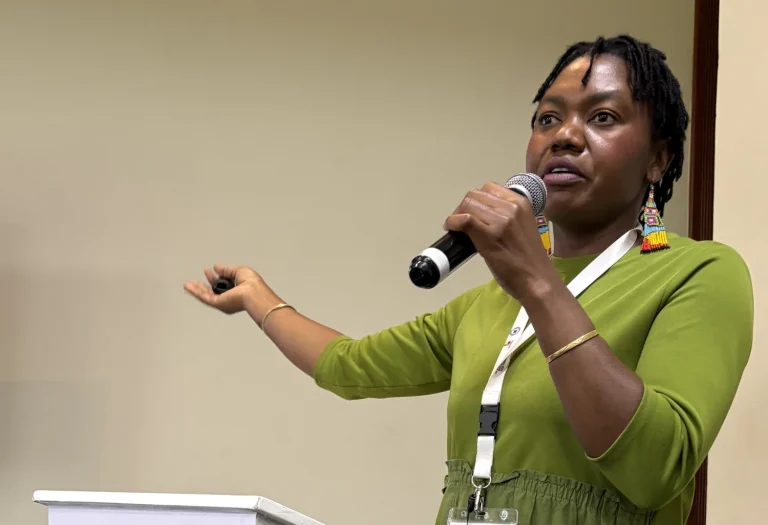
During the Festival, WorldPop organised a session on the role of demographic data in tackling challenges related to climate and health. It brought together experts from a range of fields including NGOs, commercial companies and NGOs to share experiences of integrating demographic and geospatial data into heat health mapping, vaccination microplanning in Nigeria, Central African Republic and Zambia, and into future population projections. Doctoral Researcher, Tuli Amutenya presented the FuturePop project that links modelled census estimates to possible future climate scenarios to allow more accurate climate modelling and mitigation.
Modernising National Statistics
Amutenya also engaged with National Statistical Offices (NSOs) from Rwanda, Namibia, and Kenya to discuss the integration of satellite-derived data into official statistics. The discussions highlighted the growing role of AI and the necessity of legislative frameworks that enable data access while protecting individual confidentiality.
“What stood out most was the clear momentum among NSOs to modernise their systems,” noted Amutenya. This modernisation is essential as climate change expands the range of diseases like malaria, potentially exposing an additional 4.7 billion people to health risks by 2070.
Shaping Next-Generation Intelligence
The festival concluded with a call to action for the global data community to join a four-month “build sprint”. This initiative seeks to answer whether connected signals can help countries see risks earlier and reach people before vulnerability turns into a crisis.
Learn more
- From Signals to Population Intelligence (UNFPA ‘build sprint’ registration)
- FuturePop project
- WorldPop Open Data
- WorldPop Free Learning Resources