Modelling

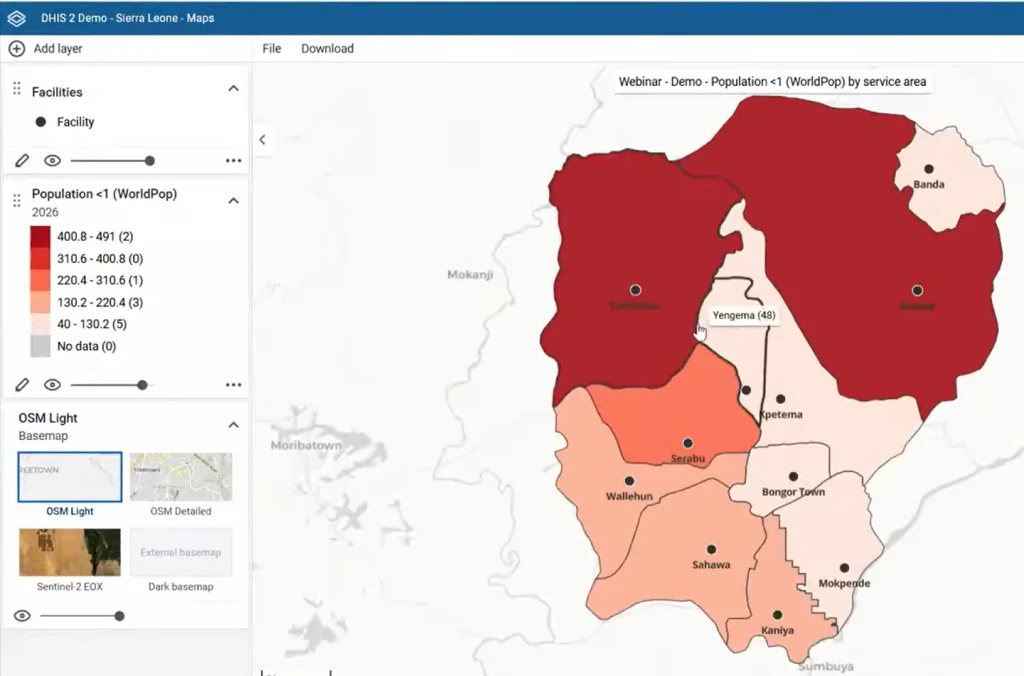
DHIS2 webinar screen capture

New webinar showcases how geospatial data reaches zero-dose children in remote regions

Take Our Survey and Help Shape What Comes Next Last week, the DHIS2 community broadcast a significant webinar detailing how high-resolution WorldPop population data has been integrated into the DHIS2 platform. This digital integration is transforming how life-saving vaccines are delivered in low- and middle-income countries. With WorldPop’s 100m population grid cells now integrated in […]

New webinar showcases how geospatial data reaches zero-dose children in remote regions Read More »

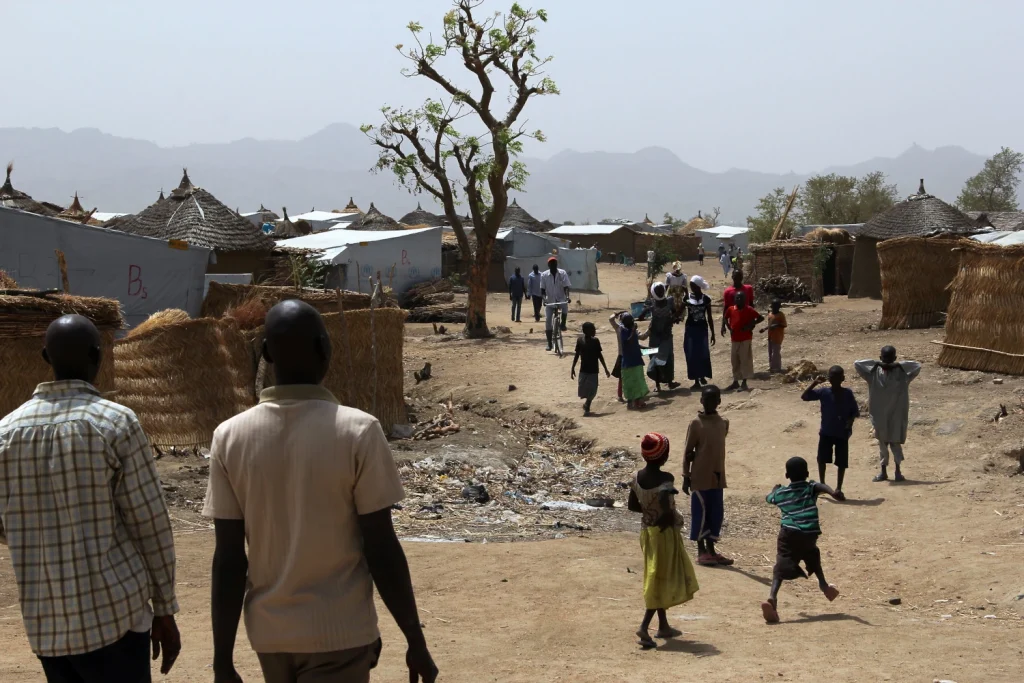
Photo of Minawao refugee camp, Cameroon

New geospatial method transforms how refugee populations are counted and surveyed 

Take Our Survey and Help Shape What Comes Next WorldPop researchers have developed a faster, more accurate way to build national survey frameworks that better represent displaced populations, which is addressing a long-standing gap in humanitarian data. The study introduces a geospatial approach that enables governments and international organisations to identify and include refugees in

New geospatial method transforms how refugee populations are counted and surveyed  Read More »

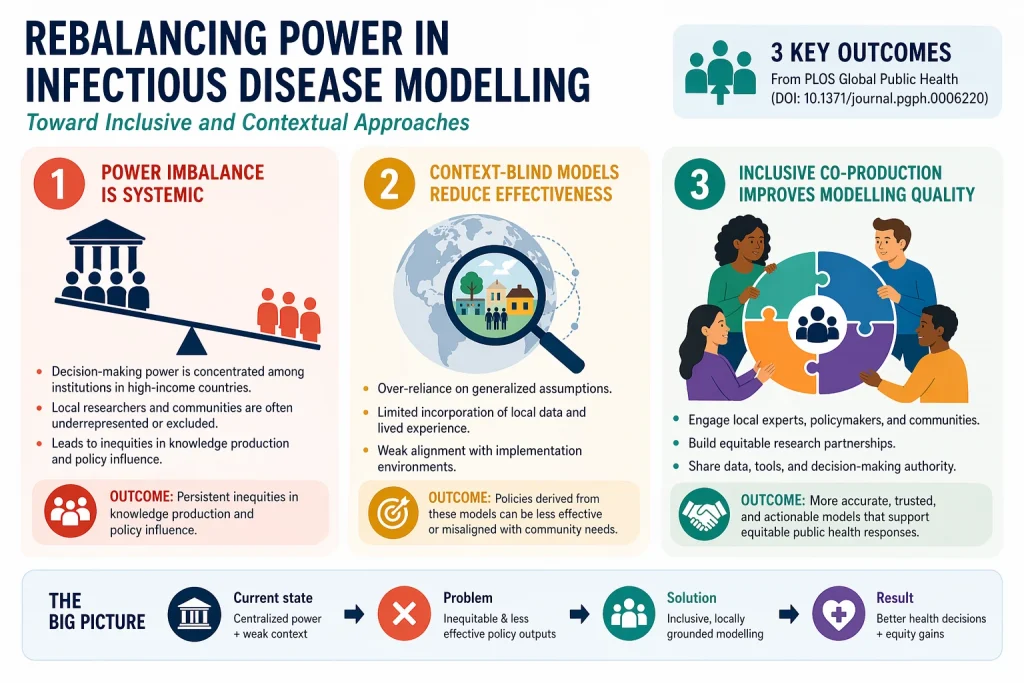
Infographic titled "Rebalancing Power In Infectious Disease Modelling".

Rebalancing Global Health: Why Local Leadership Matters in Disease Modelling

Take Our Survey and Help Shape What Comes Next An international team of researchers, including experts from the University of Ghana and WorldPop, is urging a rethink in how we model infectious diseases, and who gets to lead that work. Their study’s message is simple: to make global health fairer and more effective, countries most

Rebalancing Global Health: Why Local Leadership Matters in Disease Modelling Read More »

Photo of Dr Chris Nnanatu with Prince Adeyemi Adeniran, Statistician General, National Bureau of Statistics (pictured centre) and team members from the United Nations Population Fund Nigeria, National Population Commission, National Primary Health Care Development Agency, and Nnamdi Azikiwe University

Strengthening Population Data in Nigeria Through Co-developing Geospatial Innovation

Take Our Survey and Help Shape What Comes Next WorldPop Senior Research Fellow and Head of Spatial Statistics and Population Modelling (SSPM), Dr Chris Nnanatu recently completed a scoping visit to Nigeria as part of preparations for a new collaborative initiative focused on enhancing the country’s population data systems. The visit brought together key national

Strengthening Population Data in Nigeria Through Co-developing Geospatial Innovation Read More »

Photo of Somalia National Bureau of Statistics participants with workshop completion certificates, April 2026

Mapping Somalia’s Future: Inside WorldPop’s Data Workshop in Nairobi

Take Our Survey and Help Shape What Comes Next Researchers from WorldPop recently ran an intensive 10-day workshop in Nairobi, bringing together experts from the Somalia National Bureau of Statistics (SNBS) and the Somalia Country Office United Nations Population Fund. While the setting was Kenyan due to security concerns, the focus remained firmly on Somalia,

Mapping Somalia’s Future: Inside WorldPop’s Data Workshop in Nairobi Read More »

Photo of Ian Coady addressing CARICOM workshop meeting, Barbados, March 2026

Strengthening population data for better decisions in the Caribbean

Take Our Survey and Help Shape What Comes Next Last week, Deputy Director Ian Coady led a WorldPop expert team contributing to a regional workshop in Bridgetown, Barbados, focused on improving how population data are produced and used across the Caribbean. Delivered jointly with the United Nations Population Fund (UNFPA), the event formed part of

Strengthening population data for better decisions in the Caribbean Read More »

AI generated image of Lego minifigure on a brick mountain plus the WorldPop logo

Build a Population Map with LEGO at the Southampton Science & Engineering Festival 

Take Our Survey and Help Shape What Comes Next What can LEGO® bricks tell us about the world’s population? Quite a lot, it turns out.  The Southampton Science & Engineering Festival (SOTSEF) is a free public event where scientists, engineers and researchers share fun, hands-on activities that show how science and technology shape our everyday

Build a Population Map with LEGO at the Southampton Science & Engineering Festival  Read More »

Map showing building and population counts observed in the 213 micro-census clusters located within the modelling environment categorised by settlement class

Further Improvement for Public Health Planning: WorldPop Brings High-Resolution Population Estimates to DRC

A new study led by Senior Research Fellow, Dr Gianluca Boo has introduced a powerful new Bayesian model to estimate population distribution in Kasaï-Oriental province, Democratic Republic of the Congo (DRC), offering critical insights in a region where public health data has long been scarce. At the heart of this advanced research is a method

Further Improvement for Public Health Planning: WorldPop Brings High-Resolution Population Estimates to DRC Read More »

Maps showing cluster level estimates of proportions of children aged 12-23 months and 9-35 months who had received DTP1 and MCV1, respectively, obtained using the 2018 Nigeria Demographic and Health Survey.

Smarter Maps, Healthier Lives: New Study Reveals Best Tools to Target Vaccine Gaps

How do we find out where vaccines aren’t reaching people – especially in places with limited data? A new study led by Dr Edson Utazi at WorldPop, in collaboration with the World Health Organization and Nnamdi Azikiwe University, has evaluated how different statistical and machine learning methods perform in mapping vaccination coverage at high resolution.

Smarter Maps, Healthier Lives: New Study Reveals Best Tools to Target Vaccine Gaps Read More »

Maps showing predicted malaria prevalence in children under five and number of infected children in regions of very low to moderate transmission in Senegal (excluding Dakar for visibility purposes).

New Study Maps Malaria Risk in Senegal by Blending Environment and Vulnerability 

Senegal is pushing to eliminate malaria by 2030, and a new study could help target the fight more precisely. Researchers at the University of Namur, Belgium, the University of Ghana and WorldPop at the University of Southampton have developed a powerful new way to map malaria risk across the country by integrating both environmental “hazards”

New Study Maps Malaria Risk in Senegal by Blending Environment and Vulnerability  Read More »