
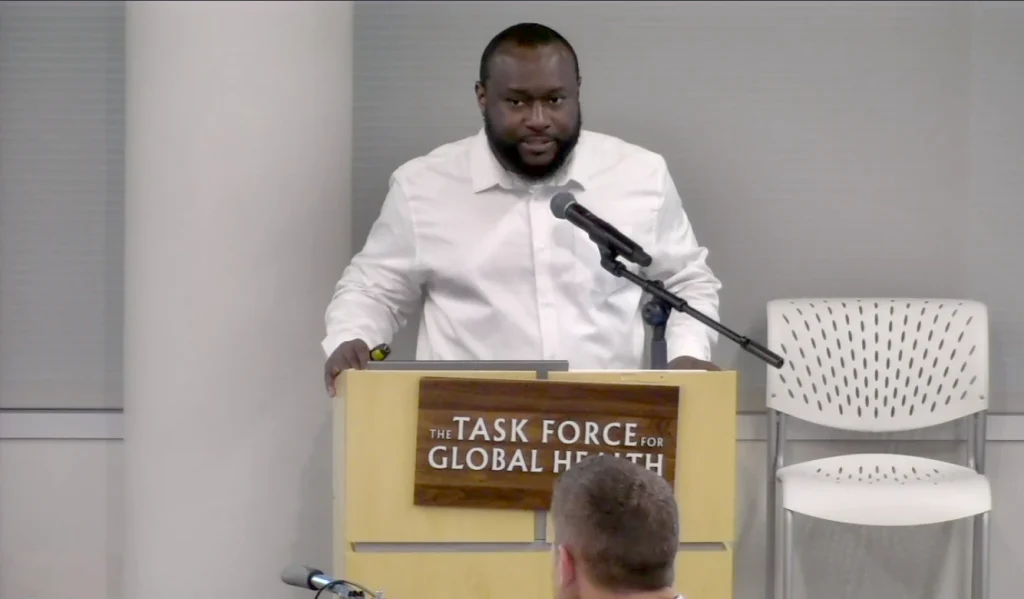
WorldPop Associate Professor, Dr Edson Utazi presented Mapping the Risk of Guinea Worm Disease project findings last week at the 2026 Guinea Worm Eradication Program (GWEP) Research Review meeting, organised by The Carter Center. The meeting brought together experts from across the world working in areas such as genomics, geospatial modelling, environmental surveillance, diagnostics, and therapeutics, all contributing to efforts to eradicate Guinea worm disease.
Adopting geostatistical and machine learning approaches to map disease risk at a 1km x 1km resolution, Dr Utazi and his project team have pinpointed the final Guinea worm transmission hotspots across sub-Saharan Africa.
Timely and accurate data are essential for making informed decisions in the final stages of eradication. While human cases dropped to just 10 in 2025, challenges such as rising insecurity and infections in animals, including domestic dogs and baboons, remain. By integrating contemporary demographic and environmental data, the WorldPop team provides local partners with the tools to target interventions in hard-to-reach areas. This work supports the global effort to make Guinea worm the second human disease in history to be eradicated.
With funding from The Carter Center, the project focuses on marginalised rural communities in six low- and middle-income countries: Angola, Cameroon, Chad, Ethiopia, Mali, and South Sudan. These communities often lack safe drinking water, making them highly vulnerable to the parasite.