
Tim O'Riordan

Infographic titled "Experts refute "missing" population claim

Global Population Data Experts Refute Claims of Systematic Rural Underrepresentation

An international team of researchers, including experts from the WorldPop group at the University of Southampton, has challenged recent claims that gridded global population maps systematically undercount rural communities. In a comprehensive response to a study published in Nature Communications, the team argues that allegations of a 50% undercount are based on a flawed research design that […]

Global Population Data Experts Refute Claims of Systematic Rural Underrepresentation Read More »

Photo of a young woman checking her smartphone in a busy Philippines market.

Transforming Social Media Signals into Accurate Population Maps for Crisis Response

An international research team led by Dr Paolo Andrich, a visiting researcher at WorldPop based at the University of Oxford, has developed a novel statistical framework to turn anonymised, biased social media data into reliable population estimates. This approach provides a timely and contemporary alternative to traditional censuses, which are often static and struggle to

Transforming Social Media Signals into Accurate Population Maps for Crisis Response Read More »

Photo of the WorldPop senior team meeting with their counterparts at DHIS2, University of Oslo

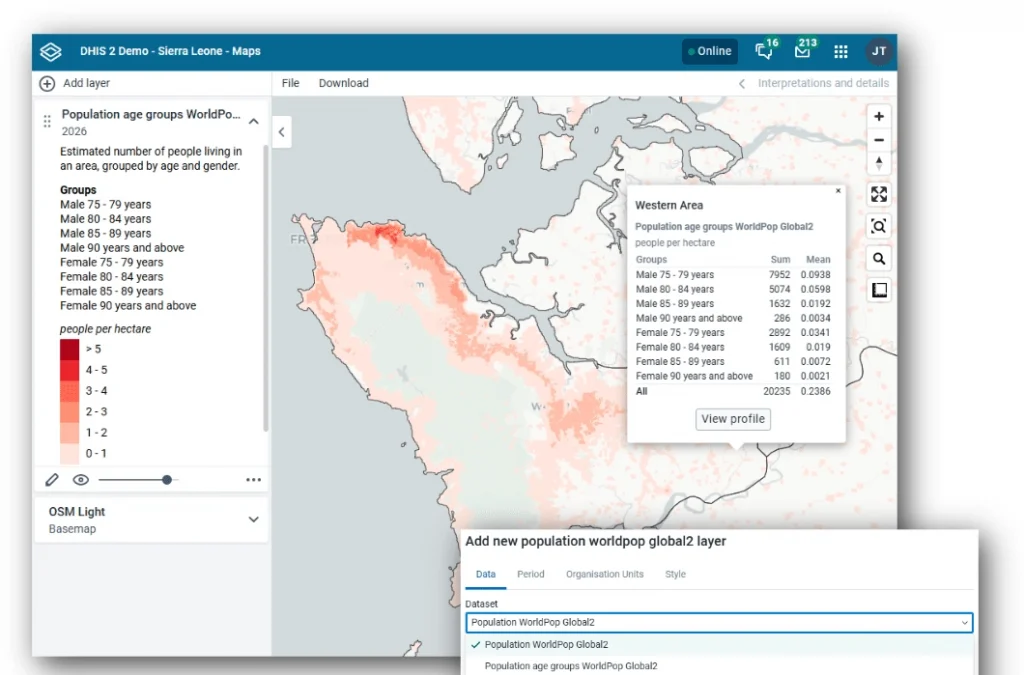
Strengthening Data Systems Together: WorldPop Meets the DHIS2 Team in Oslo

Last week, the WorldPop senior team met with their counterparts at DHIS2 at their headquarters in the University of Oslo. The conversations marked an important moment to step back from day-to-day technical work and focus on the bigger picture: how population data and digital administrative systems can work together to support better public services worldwide. 

Strengthening Data Systems Together: WorldPop Meets the DHIS2 Team in Oslo Read More »

AI generated image showing public health analysts, humanitarian responders, researchers, and urban planners using tablets, maps, and data dashboards, illustrating real-world impact. Caption reads "1,000,000+ open data downloads since 2019"

Celebrating a Milestone: 1 Million Downloads and Counting

We’re thrilled to celebrate a major milestone in our mission to ensure that everyone, everywhere is counted in decision-making. Since 2019, our open spatial demographic datasets have reached over 1 million downloads from our own site – adding to the hundreds of thousands more from our data hosting partners including HDX, ESRI’s Living Atlas, and

Celebrating a Milestone: 1 Million Downloads and Counting Read More »

Photo of conference hall with delegates at a UNICEF–MICS–WorldPop Regional Workshop for the Arab States in Amman, Jordan

Advancing National Survey Data with Geospatial Innovation in the Arab States

Last week in Amman, experts from across the Arab States came together for a pioneering UNICEF–MICS/WorldPop workshop on using geospatial methods to build modern national sampling frames. Co-led by Senior Research Fellow Dr Sarchil Qader and GIS Technician Iyanuloluwa Olowe with UNICEF GIS consultant Nazim Gashi, the workshop brought together senior officials and technical staff

Advancing National Survey Data with Geospatial Innovation in the Arab States Read More »

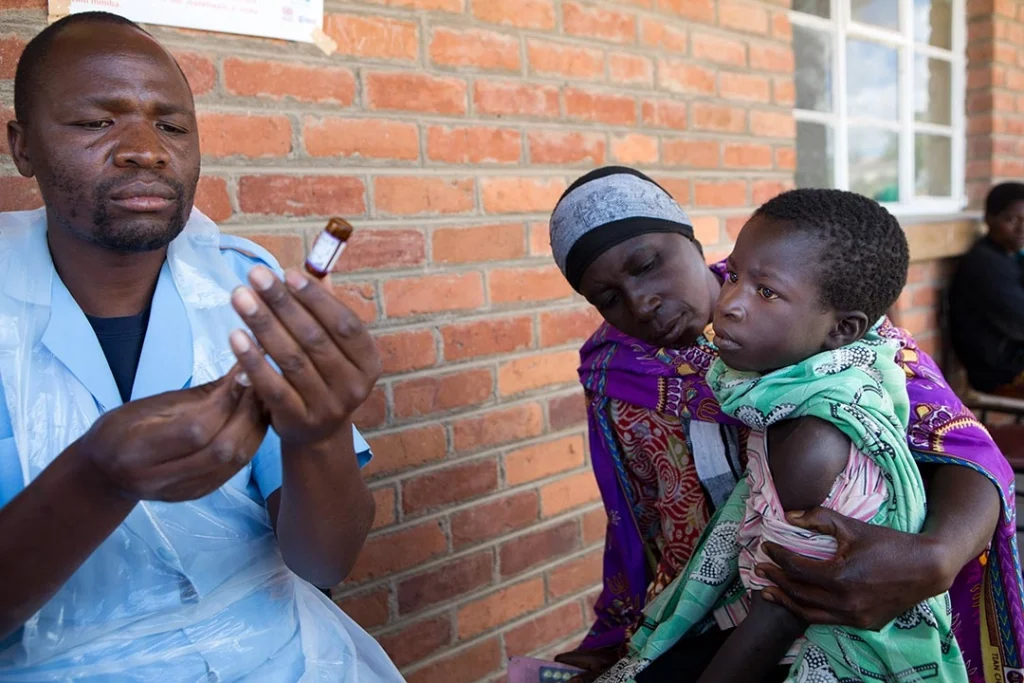
Photo of baby being vaccinated.

Mapping 25 Years of Vaccination Progress in Nigeria: New High-Resolution Insights

At WorldPop, we believe that everyone should count in data – especially the people who are most likely to be missed. That principle is at the heart of a new preprint and open data release we’re excited to share: the most detailed spatiotemporal analysis to date of childhood vaccination coverage in Nigeria, spanning 25 years

Mapping 25 Years of Vaccination Progress in Nigeria: New High-Resolution Insights Read More »

Animation showing level 2 degree of urbanisation around Kinshasa, 2015-30

Mapping People, Places and Change: Exploring WorldPop’s Latest Global Data Releases

Understanding where and how populations are distributed, and how they shift over time, is at the heart of planning for health services, responding to disasters, designing cities, and tackling global challenges like climate change. WorldPop’s mission has always been to make high-resolution population and demographic data openly available, and the latest batch of global datasets

Mapping People, Places and Change: Exploring WorldPop’s Latest Global Data Releases Read More »

Visible infrared satellite loop of Cyclone Ditwah, by SSEC/CIMSS, University of Wisconsin–Madison

How Open Population Data Makes a Difference in Crisis Response

In major disasters, rapid response depends on two critical pieces of information: how many people are affected and where they are. This knowledge enables responders to prioritise aid delivery to the most vulnerable populations. Recent evidence from Sri Lanka shows that open population data from WorldPop helps answer these questions quickly and reliably. Cyclone Ditwah

How Open Population Data Makes a Difference in Crisis Response Read More »

Photo of Dr Sarchil Qader with Dr Salahalddin Saeed the President of Komar University of Science and Technology

WorldPop Strengthens Academic Links with Komar University

WorldPop Senior Research Fellow Dr Sarchil Qader met this week with Dr Salahalddin Saeed the President of Komar University of Science and Technology (KUST) to discuss opportunities for strengthening academic collaboration between the University of Southampton, WorldPop, and universities across the Kurdistan Region of Iraq. Discussions focused on developing student and staff exchange programmes and

WorldPop Strengthens Academic Links with Komar University Read More »

Photo of a truck a, a bus and a motorcycle on a city street during a flood.

The Data Behind the Shield: How Early Warnings and Population Maps Save Lives

Each year, tropical cyclones threaten more than a billion people living in low-lying coastal cities. As storms grow more intense and cities expand, the stakes are rising. But a recent study led by Dr Haiyan Liu, a visiting researcher with WorldPop, shows that multi-hazard early warnings supported by more effective use of data can dramatically

The Data Behind the Shield: How Early Warnings and Population Maps Save Lives Read More »