
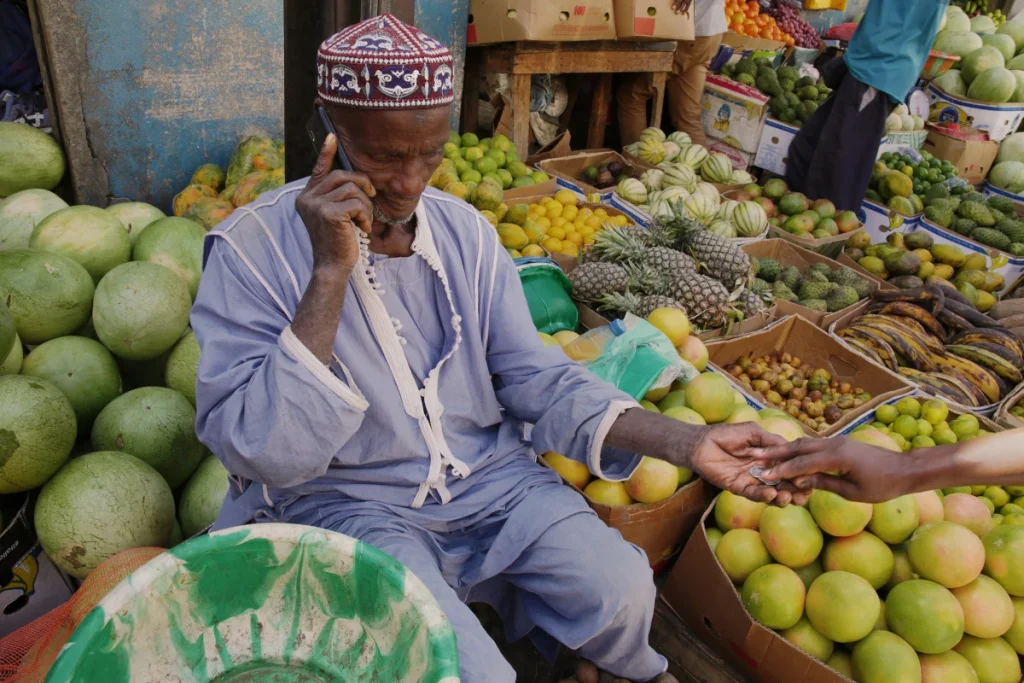
What happens when reaching the nearest food market takes hours rather than minutes? New research led by doctoral researcher, Robert Benassai-Dalmau at the Universitat Oberta de Catalunya, Barcelona, reveals that for millions of people across Africa, this is a daily reality, with important consequences for food security, economic opportunity and inequality.
In their assessment of spatial food market accessibility in Africa, recently published in Scientific Reports, researchers combined open data sources including WorldPop population datasets to create the first continent-wide picture of food market accessibility across Africa. Their findings show stark disparities between urban and rural communities. While many urban residents can access dozens of markets within 30 minutes, around 250 million people living in rural and remote areas often face journeys of one to four hours to reach a market.
The research highlights how limited market access is closely linked to poverty and food insecurity, helping identify communities where people face the greatest barriers to obtaining food. The resulting maps provide a powerful evidence base for infrastructure planning, humanitarian response and efforts to achieve the UN Sustainable Development Goals.
A key enabler of this work was WorldPop’s open population data. The research team used our population estimates to understand not just where markets are located, but how many people are affected by poor access to them. By combining demographic information with travel-time models and market locations, the study was able to quantify inequalities at an unprecedented continental scale.
This research demonstrates the value of open data for tackling global challenges. By making high-resolution population data freely available, WorldPop helps researchers, governments and humanitarian organisations turn geographic information into actionable insights, supporting better decisions for the communities that need them most.