
WorldPop researchers at the University of Southampton have published the methodology behind the massive subnational dataset used to power Global 2 – our latest high-resolution mapping of the human population.
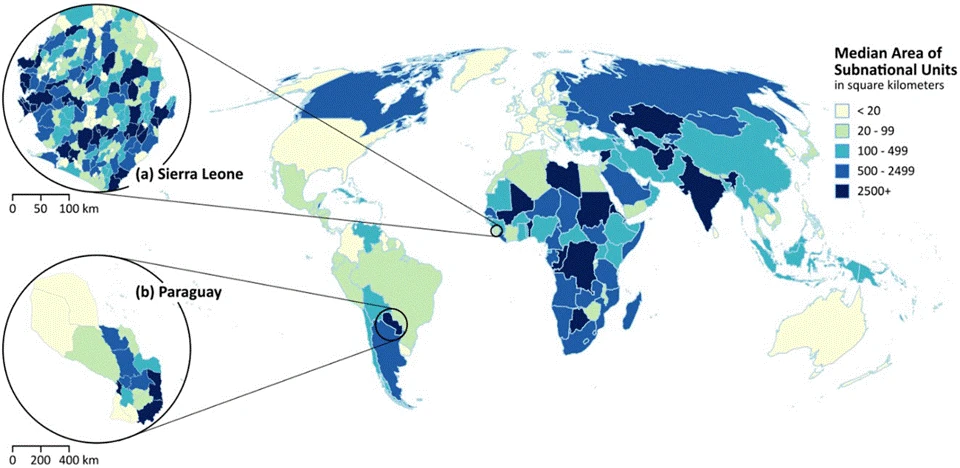
The new article, published as a preprint in VeriXiv, details how the team harmonised and projected population data for more than 716,000 subnational administrative units across 242 countries and territories. These estimates, covering the period from 2010 to 2030, serve as the critical input for the Global 2 dataset, where they are combined with satellite imagery and machine learning to create 100-metre resolution gridded maps.
While recent articles in The Atlantic and other outlets have focused on “The Great Depopulation,” the WorldPop data for the 2010–2030 period captures a world that is still growing substantially. The global population reached an estimated 8.16 billion in 2024 and is expected to grow by another 1 to 2 billion people before potentially peaking closer to 2055.
Rather than a global decline today, the research highlights the shifting demographic structures that will eventually lead to those later peaks. This creates a “mixed picture” where some countries are facing ageing or localised declines, while others support youthful, fast-growing populations.
The data described in this study represents the foundational “input data” for WorldPop’s broader mapping efforts. By standardising census-based counts into consistent age and sex structures, researchers provided the baseline that the Global 2 random forest models then disaggregate.
This disaggregation uses “covariates” (such as satellite-derived building footprints and settlement heights) to map estimated population distributions.
“Subnational estimates are essential for identifying regional disparities that national figures often obscure,” says Dr Duygu Cihan, the study’s lead author. “Understanding these variations in age and sex structure is vital for long-term planning in healthcare, education, and disaster response”.
This research was supported by funding from the Gates Foundation. The Global 2 gridded datasets and the underlying administrative unit estimates are publicly available to support global development and humanitarian efforts.