
Data for Development Phase 2
Project leads: Attila Lazar
Team: Ian Coady, Graeme Hornby, Chris Nnanatu, Heather Chamberlain, Sarchil Qader, Kathryn Baxter
Funding: UK Foreign, Commonwealth & Development Office (FCDO)
Start: Aug 2025
Completion: Mar 2026
Data for Development Phase 2 has helped lay the groundwork for the long-term generation and use of population data in all three project countries. By focusing on co-development and partnership working, the programme has built relationships that extend well beyond the lifespan of a single project, creating opportunities for continued collaboration and knowledge sharing with national statistics offices.
Even where resource constraints limited opportunities for in-country co-production, WorldPop maintained close engagement with partners, providing advice, guidance and support while exploring future opportunities to work together. These relationships will help ensure that the benefits of the project continue to be realised in the years ahead.
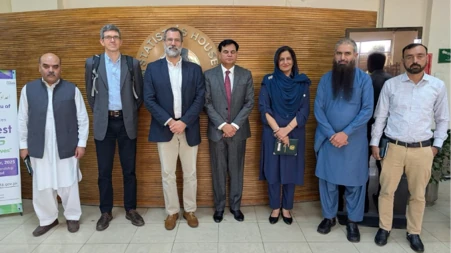
Pakistan
In Pakistan, the project established a strong network of partners across government, research organisations and international agencies, including the Pakistan Bureau of Statistics (data custodian), Urban unit (half-governmental data user), ResDev, URAAN Pakistan (economic planning division), UNFPA, UNICEF and the World Bank. This growing community of data users and producers is well placed to adopt modern data technologies and support future collaboration. Initial remote capacity-strengthening activities have already helped prepare the ground for future projects and more impactful implementation.
Zambia
In Zambia, relationships developed through successive projects have continued to strengthen. ZamStats has shown strong interest in completing the work and applying modern technologies to future activities. Training delivered through earlier WorldPop projects has already had a lasting impact, with GIS staff routinely using the R programming language for data analysis, visualisation and dashboard development. WorldPop has also continued to provide technical support when needed.
Ethiopia
In Ethiopia, the Ethiopian Statistics Service has remained engaged with WorldPop and has expressed interest in finalising outputs from the first phase of the programme. This continued dialogue demonstrates a commitment to taking ownership of the data and ensuring its future use.
About Us
The WorldPop research programme, based in the School of Geography and Environmental Sciences at the University of Southampton, is a multi-sectoral team of researchers, technicians and project specialists that produces data on population distributions and characteristics at high spatial resolution.
Initiated in October 2013 to combine The AfriPop Project, AsiaPop and AmeriPop projects, we have a diverse portfolio of projects, including large multi-million-pound collaborative projects with partner organisations, commercial data providers and international development organisations.
WorldPop develops and publishes open, high-resolution population datasets to support social, economic, and environmental development, humanitarian response, and the Sustainable Development Goals. This data is not intended, and should not be used, for purposes that discriminate against, exploit, surveil, or otherwise harm individuals or vulnerable populations; users are expected to apply it responsibly, assess the risks of their own analyses (particularly when combining it with other datasets) and are solely responsible for how they use it.