
Last week, I had the privilege of attending the 3rd International Conference of the Chartered Institute of Statisticians of Nigeria (CISON) in Abuja, Nigeria. The conference provided an important platform for discussions on the future of statistics, data science and evidence-based policymaking, bringing together experts from academia, government and industry to share ideas and experiences.
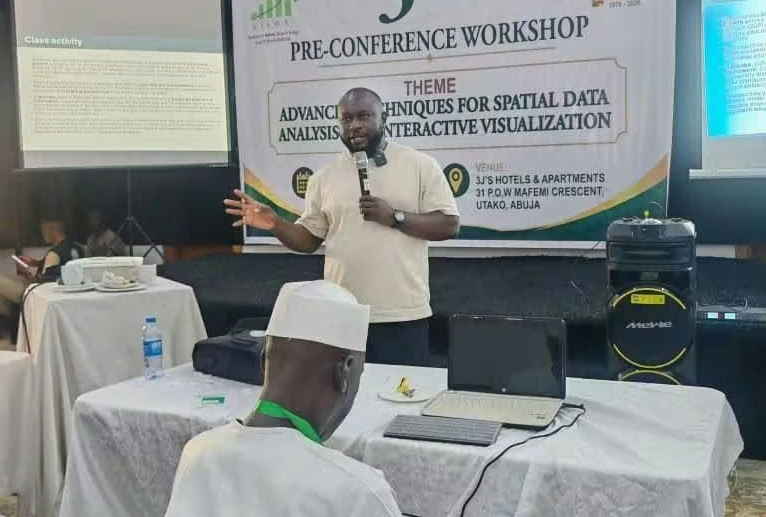
Before the main conference began, I delivered a two-day pre-conference workshop, Advanced Techniques for Spatial Data Analysis and Interactive Visualisation, designed to equip participants with modern spatial and spatiotemporal modelling skills and practical tools for data visualisation.
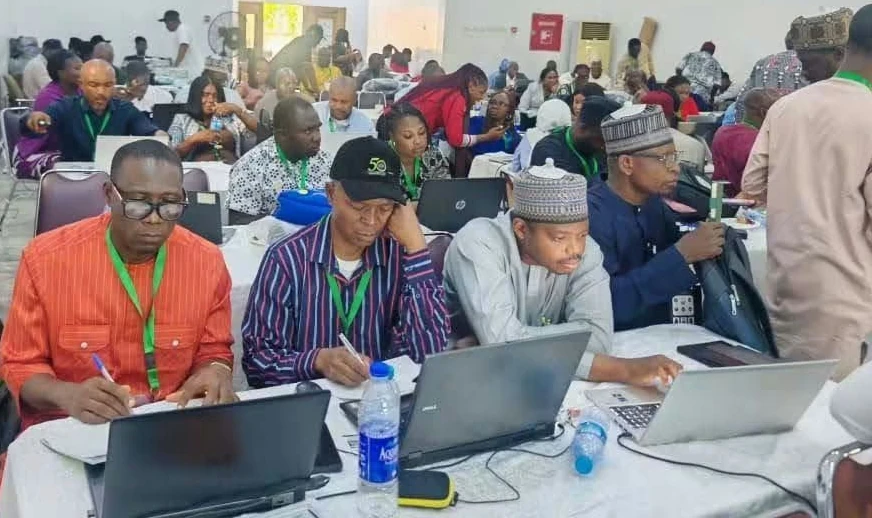
The response exceeded my expectations. Around 150 participants attended from across academia, government and industry, making it one of the most rewarding training experiences I have delivered in Nigeria. The level of engagement throughout the workshop was remarkable, with lively discussions, thoughtful questions and enthusiastic participation from attendees keen to strengthen their skills in spatial statistics and data analysis.
This was a great opportunity to contribute to capacity building in Nigeria and help support the next generation of spatial statisticians. Developing local expertise is essential if countries are to produce the high-quality, timely evidence needed to address complex development challenges. I am especially grateful to Muhammed Tahir Muhammed and Dr Samuel Enogwe for their invaluable support in helping to deliver the workshop.

The conference itself featured a range of stimulating presentations and discussions. One highlight was a keynote address by Professor Steve MacFeely of the OECD – Reflections on the Dataverse: Revolutions and Spillovers. Following the keynote, I had the opportunity to join a panel discussion where I highlighted the importance of integrated small area statistical systems in low- and middle-income countries. These systems can bring together census, survey, administrative and geospatial data to generate reliable local-level estimates of health and development indicators using advanced statistical and machine learning approaches.
A key message I shared was that building analytical expertise within countries is just as important as developing the methods themselves. Strengthening local capacity supports country ownership of data, analytical tools and the evidence used to guide development decisions.
Beyond the formal sessions, the conference offered a valuable opportunity to reconnect with colleagues and exchange ideas with both long-standing collaborators and new contacts. I particularly enjoyed meeting former colleagues from the Department of Statistics at Nnamdi Azikiwe University and hearing about their latest work.
My sincere thanks go to Dr Godday Ebuh and the CISON leadership team for the invitation and for organising such a successful and engaging event. The enthusiasm, professionalism and commitment shown throughout the conference demonstrate the vital role that statisticians continue to play in supporting sustainable development across Nigeria and beyond