
As cities expand and rural landscapes change, understanding exactly where people live has never been more important. Governments need reliable information to plan schools and hospitals, respond to health crises, and track progress toward global development goals. That’s why the Degree of Urbanisation (DEGURBA) – a UN-adopted method for consistently defining cities, towns, suburbs, and rural areas – has become such a valuable tool. But applying it effectively requires more than just accurate data; it requires building the skills and confidence of the people who work with that data every day.
This is where WorldPop’s latest project, funded by the European Commission, is making a real impact. The project combines technical work of assessing how robust and reliable the DEGURBA method is, with capacity-building efforts to help national statistical offices in low- and middle-income countries apply DEGURBA and integrate it into their long-term planning systems.
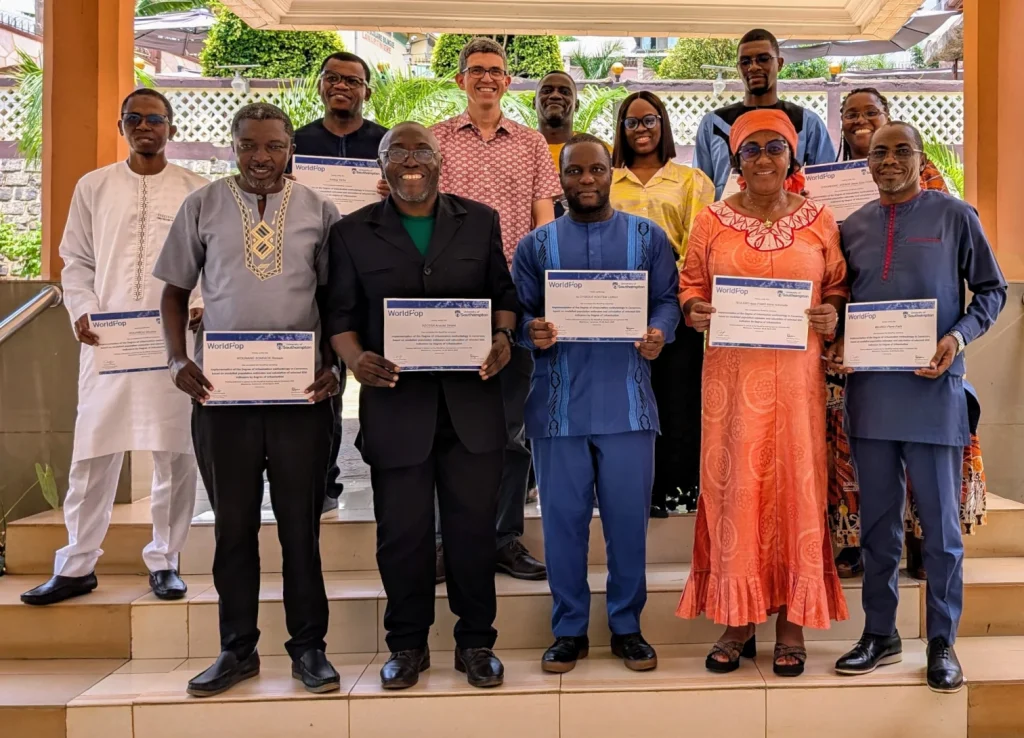
Earlier this year, Senior Enterprise Fellow Graeme Hornby and GIS Technician Iyanuloluwa Olowe travelled to Cameroon to work directly with experts from the National Institute of Statistics and several government ministries. Over several days, participants learned how to classify the country’s landscape using modelled population estimates and settlement data. They didn’t just learn the theory – they applied the method to gain new insights into real health indicators such as HIV prevalence, malaria rates, and childhood vaccination coverage.
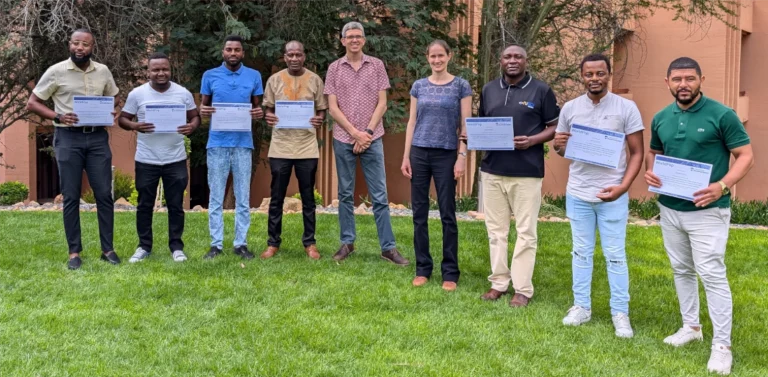
The hands-on training gave the team the confidence to independently apply the nuanced DEGURBA framework to existing and future data for consistent delineation of settlements along the urban-rural spectrum. A week later, the focus shifted to Namibia, where staff from the Namibia Statistics Agency (NSA) learned to apply DEGURBA to their newly collected 2023 census data. The workshop allowed participants to generate urban–rural classifications and link them to key Sustainable Development Goal (SDG) indicators – such as access to safe drinking water, sanitation, electricity, and the proportion of people living in informal settlements.
The NSA highlighted an unexpected benefit: the gridded outputs produced through the training offer better privacy protection than original point-based datasets, making them safer to share with policymakers and partners.
Alongside practical exercises, discussions in both countries explored technical challenges – such as ensuring datasets truly reflect residential populations or dealing with very large administrative areas. Yet participants consistently agreed that the training equipped them with the skills needed to troubleshoot these issues and update outputs as new data becomes available.
By the end of each workshop, teams could complete the full DEGURBA workflow on their own. This independence is the core of WorldPop’s capacity-building mission: enabling governments to use novel methods confidently, sustainably, and in ways that directly support better policy and stronger progress toward the Sustainable Development Goals.
In a world that’s changing fast, empowering people with skills is just as important as developing new tools – and DEGURBA training is already proving how powerful that combination can be.