
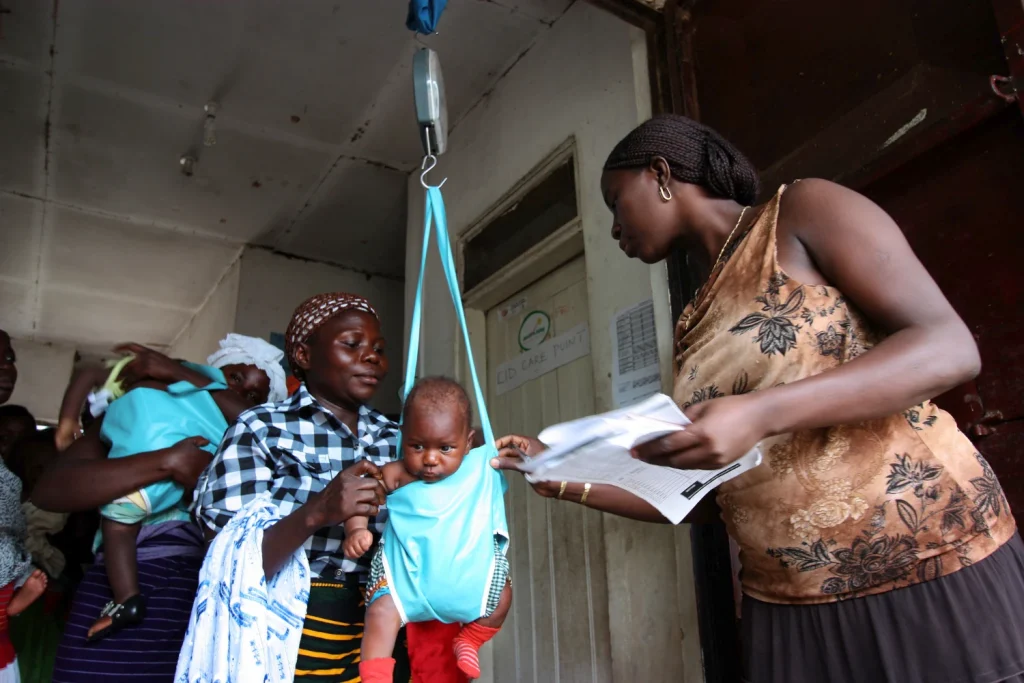
Districts in Uganda that host refugees are seeing slightly better maternal and child health outcomes than those that do not, according to new research analysing routine health data from 2020 to 2023. The Countdown to 2030 study, led by Rogers Nsubuga, PhD researcher at Makerere University, Uganda, found higher coverage in key services such as antenatal care, safe deliveries and postnatal support in refugee-hosting areas, despite the added pressure on local health systems. Researchers say this is largely due to increased government funding and stronger health system support in these districts.
Dr Kristine Nilsen part of the WorldPop team at the University of Southampton, contributed to the study’s data-driven approach. By combining routine health records with system performance data, the research provides a more up-to-date picture than traditional surveys.
Uganda hosts over 1.8 million refugees, and districts receiving them often benefit from coordinated investment and planning. The study shows that this support can improve healthcare access not just for refugees, but for local communities as well.
The findings highlight the importance of timely, accurate data in guiding health policy, especially in fast-changing situations. Researchers say better population data, like that developed by WorldPop, will be key to tracking progress and ensuring resources reach those who need them most.
Funding was provided by the Gates Foundation.