
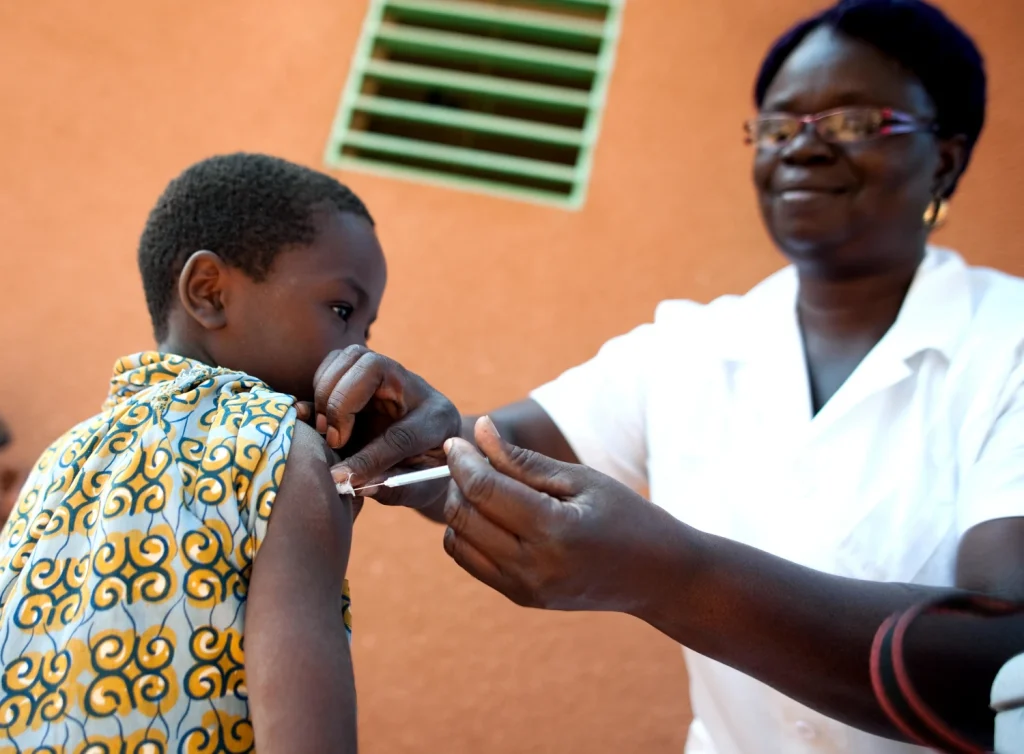
Reliable vaccination data can mean the difference between disease outbreaks being prevented or missed entirely. Researchers led by WorldPop’s Dr Edson Utazi have developed a new statistical framework that combines multiple sources of vaccination data to produce more accurate estimates of national immunisation coverage, helping policymakers make better informed decisions about vaccination programmes worldwide.
The study tackles a common challenge in global health: different sources of vaccination data often provide different answers. Administrative records, official government reports and household surveys can each tell part of the story, but none provides a complete picture on its own.
The research introduces a new Bayesian modelling framework that brings these sources together while accounting for uncertainty in the data. The result is a more reliable estimate of national immunisation coverage and a clearer understanding of how confident decision-makers can be in the figures.
Associate Professor Dr Utazi worked with colleagues from the World Health Organization (WHO), UNICEF and the School of Mathematical Sciences at the University of Southampton to develop the methodology. Testing the approach with vaccination data from WHO Member States between 2000 and 2019 showed that the team’s preferred model consistently produced more accurate estimates than alternative methods. The approach was particularly effective when working with incomplete data, a common challenge in many low- and middle-income countries.
The researchers also developed an open-source software package, imcover, to help health organisations apply the method and generate national and regional vaccination coverage estimates.
Dr Utazi believes the approach could complement existing WHO and UNICEF estimation methods, helping strengthen the evidence used to guide immunisation programmes and protect communities from vaccine-preventable diseases.
Learn more
- Hierarchical Modeling Approaches for Combining Information From Multiple Data Sources to Produce Annual Estimates of National Immunization Coverage (Biometrical Journal)
- imcover: Immunisation coverage modelling in R (GitHub)
- Data used in this study (WHO)
- WorldPop Open Data
- WorldPop Free Learning Resources