
A growing number of people are leaving cities for rural and suburban areas, a trend known as counter-urbanisation. While the environmental impacts of urban growth are well understood, an international team of researchers led by WorldPop postgraduate researcher Qianwen Duan say much less is known about what happens when people move in the opposite direction.
In a new review published in PLOS Ecosystems, the researchers examined evidence from around the world to understand how this shift in population is changing landscapes, biodiversity and ecosystem services.
The study found that the ecological consequences of counter-urbanisation are complex. New housing, roads and infrastructure can lead to habitat loss and fragmentation in rural areas. At the same time, some newcomers may help restore habitats, support conservation projects and encourage more sustainable land management.
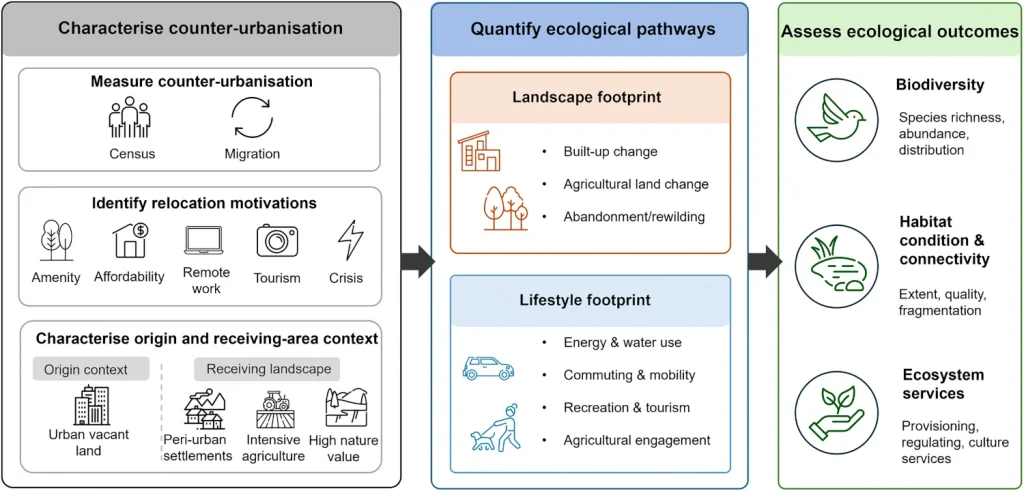
The researchers identified two main ways these effects occur. The first is through physical changes to the landscape, such as development, farming changes and land abandonment. The second is through lifestyle changes, including commuting, recreation and household resource use.
Importantly, the review concludes that counter-urbanisation is neither inherently good nor bad for nature. Outcomes depend on who is moving, why they are moving and the characteristics of the places they move to.
The team has developed a new framework to help researchers and policymakers assess these impacts and support decisions that balance rural development, biodiversity conservation and climate resilience.