
Syria now has its first nationally approved digital system for selecting households for surveys. Developed with WorldPop’s support, it will help produce more reliable population data for public services, recovery and future censuses.
Years of conflict and limited international engagement have made nationwide surveys difficult. This has left government, UN agencies and development partners without the evidence they need to plan services and direct support.
WorldPop worked with UNICEF and Syria’s Planning and Statistics Commission to build the new system. It will support UNICEF’s next major household survey (MICS) and future national data collection.
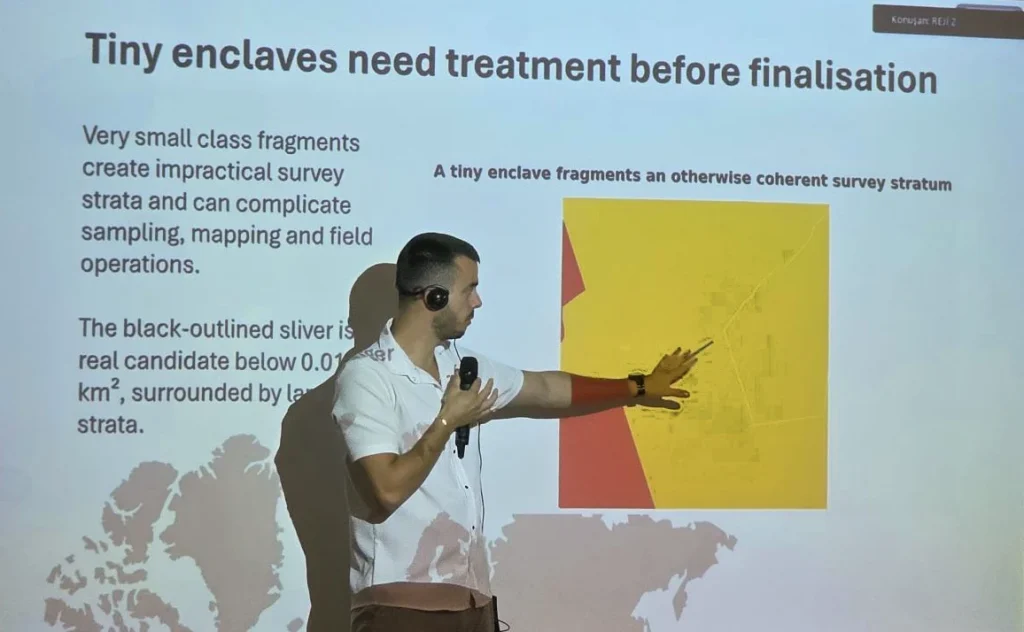
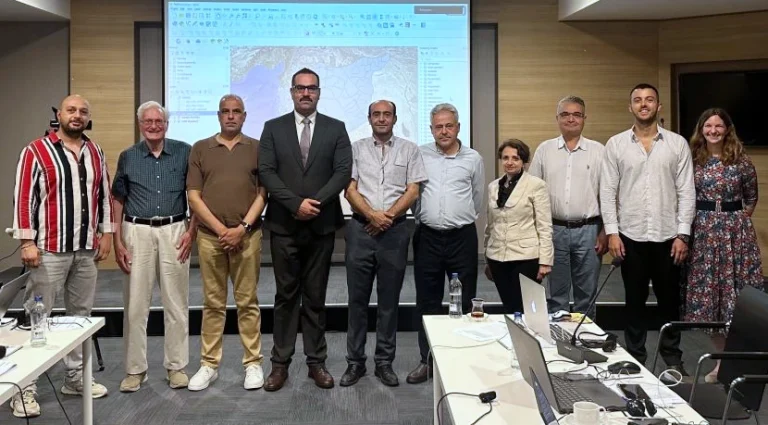
At a five-day workshop in Istanbul last week, WorldPop’s Dr Sarchil Qader, Dr Aubrey Steingraber and Nazim Gashi worked with the Syrian Planning and Statistics Commission (PSC) and UNICEF regional and country teams to help them manage and update the system themselves. The training covered digital mapping, location-based data and survey design, helping build the skills needed to run the system over the long term.
Dr Qader comments: “Building local skills to manage digital sampling systems gives countries greater ownership of their data and supports better decisions.”
By creating Syria’s first-ever national digital sampling frame, the country now has a robust foundation for nationally representative surveys, enabling more accurate, evidence-based decisions and better-targeted investments for communities across Syria.
Another key achievement was strengthening geospatial capacity within PSC and UNICEF, ensuring local ownership, sustainable skills transfer, and the ability to independently maintain and use Syria’s digital national sampling frame for future surveys and statistical programmes.
The project shows how international expertise and local knowledge can work together to strengthen essential data systems, even in difficult settings. For Syria, this is an important step towards better evidence, better services and more informed recovery and development.
The initiative was funded by UNICEF.