
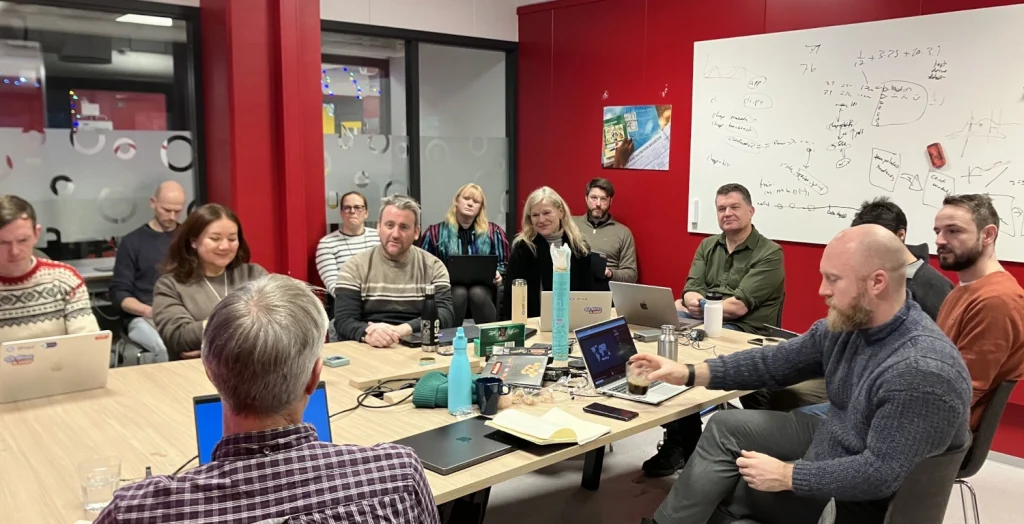
Last week, the WorldPop senior team met with their counterparts at DHIS2 at their headquarters in the University of Oslo. The conversations marked an important moment to step back from day-to-day technical work and focus on the bigger picture: how population data and digital administrative systems can work together to support better public services worldwide.
DHIS2 is the world’s largest digital administrative system. While it is best known as a health information management platform, it is increasingly used across sectors including education, climate preparedness and social services. Today, DHIS2 technology supports systems serving 3.2 billion people globally, helping national and local administrators and frontline workers allocate resources, deliver vaccines, manage disease outbreaks and respond to emerging challenges.
WorldPop plays a small but important role in this ecosystem, providing core demographic data that can be integrated directly into the DHIS2 platform. During our time in Oslo, it was inspiring to hear real-world stories from countries such as Rwanda, Chad and the Central African Republic, where WorldPop population data is being embedded into fully customisable, locally owned DHIS2 systems. These integrations help ensure that populations are visible in planning processes – so services can reach the people who need them most.
Our discussions focused on data integration and research agendas, supporting country partners and on identifying concrete opportunities for future collaboration. We explored how closer technical and operational alignment could strengthen interoperability, support national decision-making and generate shared impact narratives through webinars, case studies and other outward-facing activities.
One theme that stood out clearly was what makes DHIS2 a true digital public good:
- Technologies that are fully customisable to local contexts and learning needs.
- Systems that encourage local data integration and respect digital and data sovereignty.
- No “back doors” – only national and local users can access their data.
- No repackaging or selling of individual-level insights.
- A global community of users and developers who share solutions without centralised control.
- A dedicated network of creators, developers, managers and researchers committed to effective public service delivery.
For WorldPop, this meeting reaffirmed the value of partnerships that place country ownership, openness and trust at the centre of digital systems. As we move forward, we are excited to continue working with DHIS2 to design a shared partnership framework and practical next steps that strengthen how population data supports real-world decisions.
Learn more
- WorldPop/DHIS2 collaboration case study
How WorldPop partners with DHIS2 to provide population data for their Maps App. - WorldPop Open Data Hub
Explore and download open demographic and geospatial datasets from around the world. - WorldPop Learning Resources
Build your geospatial skills with free, expert-led, self-paced materials.