
At WorldPop, our mission is to ensure that every person is mapped and counted in decision making, providing the high-resolution open-access data necessary to tackle the world’s most pressing challenges. Increasingly, our datasets are becoming a cornerstone for data-driven journalism, helping newsrooms translate complex scientific projections into tangible human stories.
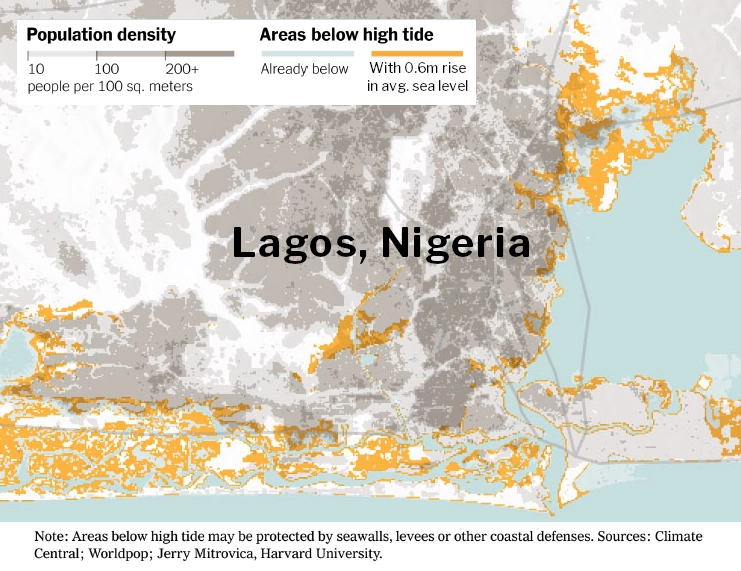
A recent standout example is a New York Times investigation into the potential collapse of the Thwaites Glacier in Antarctica. To understand the true scale of the risk, Times reporter Mira Rojanasakul conducted an analysis using WorldPop’s 2026 population estimates from our recent Global 2 data release. By layering our granular population data over elevation models, she was able to quantify an estimate of the number of people currently living in the path of rising tides.
The results of this work are striking:
- In Shanghai, a two-foot rise in sea levels could affect an additional 4.7 million people.
- In Bangkok, as many as 7 million people currently live in areas vulnerable to future flooding.
- Across the globe, from Lagos to New Orleans, our data helped visualise how heavily populated urban centres are concentrated in high-risk coastal zones.
By providing open-access, peer-reviewed demographic data, we empower journalists to move beyond abstract statistics. This allows them to show where people are potentially at risk, helping the public and policymakers understand the urgent need for climate adaptation. We are pleased to see WorldPop open data at the heart of such important global reporting.