
Researchers have developed a powerful new way to track malaria with pinpoint accuracy, providing a vital tool for health officials to save lives in low- and middle-income countries. An international team, including WorldPop’s Dr Chris Nnanatu, has created high-resolution maps that reveal the complex patterns of malaria transmission across Senegal.
For years, health officials relied on household surveys to estimate malaria risk. However, these surveys often struggle to capture the full picture in areas where malaria is rare or transmission is changing rapidly. The new study, published in BMJ Global Health, instead uses anonymised and aggregated data collected directly from public health facilities between 2017 and 2021.
By analysing travel times to clinics and environmental data, the team used a technique called “dasymetric disaggregation.” This method allowed them to redistribute reported cases into precise 1 km grid cells. This level of detail is essential for understanding where the disease is actually striking.
Dr Nnanatu comments: “Our findings show that a ‘one size fits all’ model doesn’t work for malaria. The factors driving the disease in a crowded city are very different from those in a remote rural village”.
The research found that malaria incidence in Senegal fluctuated over the five-year period, reaching 71 cases per 1,000 people by 2021. Crucially, the risk factors changed depending on the local environment. In high-transmission rural areas, flooded vegetation was a key driver. In contrast, in urban settings like Dakar, factors like proximity to croplands and built-up areas played a bigger role.
This approach is highly scalable. As more countries in sub-Saharan Africa adopt digital health systems, these geospatial mapping tools can help governments target bed nets and treatments exactly where they are needed most. It also helps identify “blind spots” where people may be sick but unable to reach a clinic, highlighting a critical need for better healthcare access in remote regions.
The research was supported by the Fonds de la Recherche Scientifique (F.R.S.-FNRS).
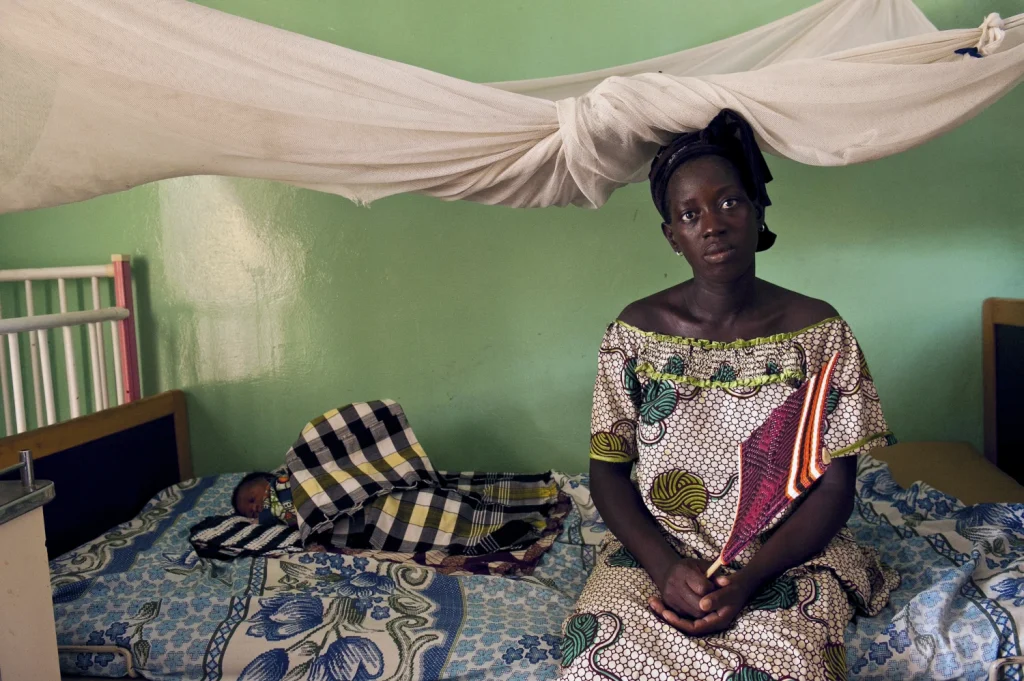
Image: Mother and daughter with bed net, Bicole village, Senegal, Arne Hoel / World Bank, 2010, CC BY-NC-ND 2.0