
An international research team led by Dr Winfred Dotse-Gborgbortsi, Lecturer in Geographies of Health at University College London and Dr Kristine Nilsen, Associate Professor of Global Health & Social Statistics at the University of Southampton, and including investigators from WorldPop has produced the first high-resolution geospatial mapping of women completely disengaged from life-saving maternal and newborn health services across 34 African countries. The study identifies a “priority population” of 63 million women who are expected to miss all essential clinical care during pregnancy and childbirth by 2025.
This research contributes directly to the Countdown to 2030 project, a global collaboration that tracks the progress of life-saving interventions for reproductive, maternal, newborn, child, and adolescent health. Led by WorldPop’s Geospatial Data & Analysis Center, this work provides the subnational evidence base required to improve health outcomes in low- and middle-income countries.
The study, published as a preprint in VeriXiv, defines Zero Maternal and Newborn Health (ZMNH) as women who receive fewer than four antenatal visits, have no skilled attendant at birth, and receive no postnatal care within 48 hours. By using WorldPop open data and anonymised and aggregated household survey data, researchers created grid cells at a 1km² resolution to pinpoint exactly where these service gaps are most severe.
Findings show that while national averages often hide inequalities, the reality on the ground varies wildly. Prevalence of ZMNH ranges from just 5% in Malawi to 74% in Chad. Ethiopia and Nigeria face the highest humanitarian burden, accounting for 29 million women at risk, which is nearly half of the total across all 34 countries.
Dr Dotse-Gborgbortsi, comments: “Identifying ZMNH women reveals a priority population that would otherwise be invisible. National and regional averages often mask major gaps in service utilisation. Our study enables efficient and targeted interventions for a priority group”.
The study highlights a critical humanitarian focus on the “urban poor” and those in rapidly growing peri-urban settings. While rural areas often have higher percentages of disengaged women, over 52% of the total number of women at risk actually live in peri-urban areas. Furthermore, poverty remains the strongest predictor of disengagement, with 80% of all ZMNH women belonging to the poorest wealth groups.
To reach these underserved populations, the team integrated building footprints and geospatial mapping to ensure the data reflects where people actually live. This contemporary data is designed to help policymakers in low- and middle-income countries allocate limited resources toward mobile clinics and telehealth in the areas of greatest need.
The project was supported by the Bill and Melinda Gates Foundation.
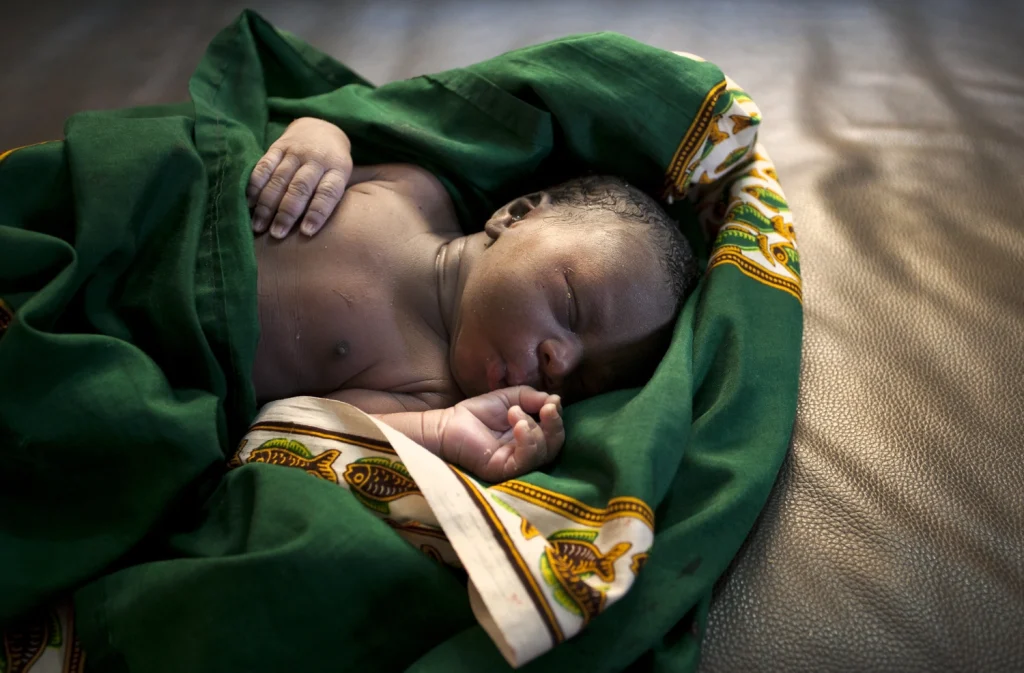
Image: A newborn boy in the maternity ward of Asacoba health clinic in Bamako, World Bank Photo Collection, 2013 CC BY-NC-ND 2.0
Learn more
- Mapping zero maternal and newborn health service utilisation across 34 African countries: a geostatistical analysis of household survey data (VeriXiv)
- Datasets generated and analysed during this study (WorldPop)
- The Geospatial Data & Analysis Center (Countdown to 2030)
- WorldPop Open Data
- WorldPop Free Learning Resources