
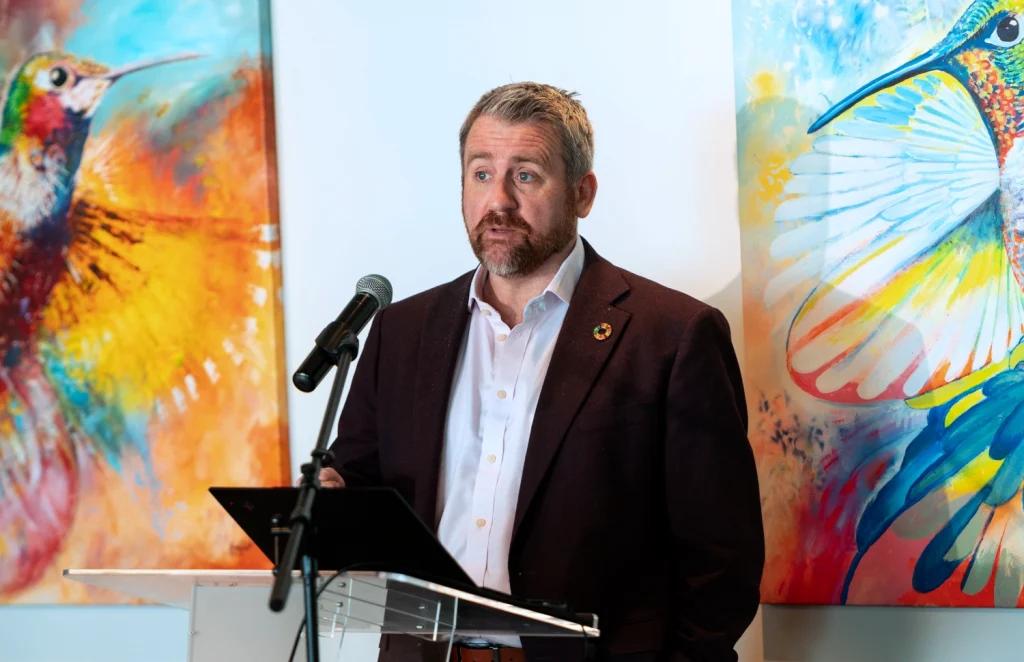
Last week, Deputy Director Ian Coady led a WorldPop expert team contributing to a regional workshop in Bridgetown, Barbados, focused on improving how population data are produced and used across the Caribbean. Delivered jointly with the United Nations Population Fund (UNFPA), the event formed part of a broader project supported by the UK Foreign, Commonwealth and Development Office (FCDO) to work with the Office for National Statistics (ONS) and the Caribbean Community CARICOM to strengthen demographic data systems in the region.
The five-day workshop brought together National Statistics Offices (NSOs) from across the Caribbean, alongside international partners and technical experts. Participants learned how new modelling approaches and simplified tools can help to produce more detailed and consistent population information that policymakers increasingly rely on to guide development planning.
Recent discussions in the region had highlighted the importance of strengthening population data. Policymakers are facing complex challenges, including ageing populations, shrinking labour forces, and the growing impacts of extreme weather events. These pressures make it essential to understand not only how many people live in a country, but also where they live and how settlements are changing over time.
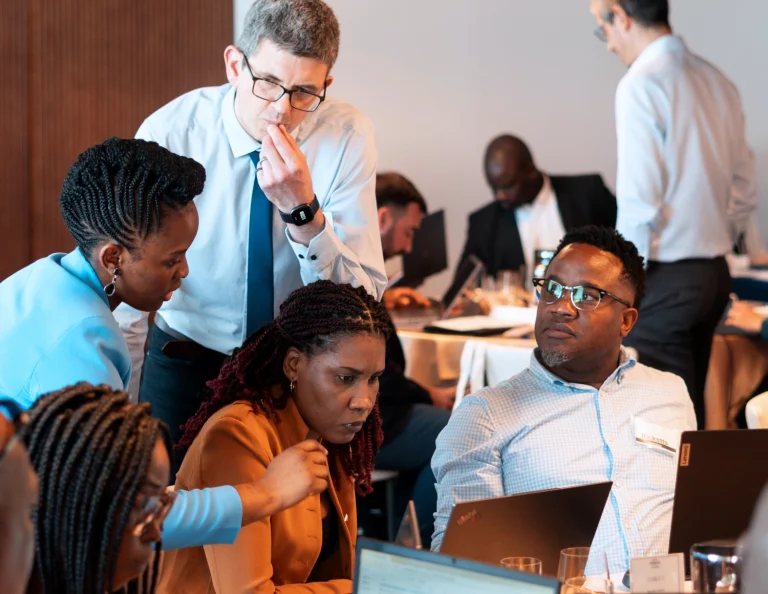
During the workshop, WorldPop researchers demonstrated how high-resolution gridded population estimates can be produced using the PopRF tool, which applies machine-learning techniques to generate detailed maps of population distribution. These datasets allow analysts to move beyond traditional administrative statistics and examine population patterns at a much finer geographic scale.
A key focus of the training was the Degree of Urbanisation (DEGURBA) methodology, an internationally recognised framework for classifying settlements as cities, towns, or rural areas. Applying this framework consistently across countries helps make urbanisation statistics more comparable and useful for policy.
Participants worked through the full workflow: developing small-area population estimates, validating the results, and then applying the DEGURBA approach to produce harmonised settlement classifications.
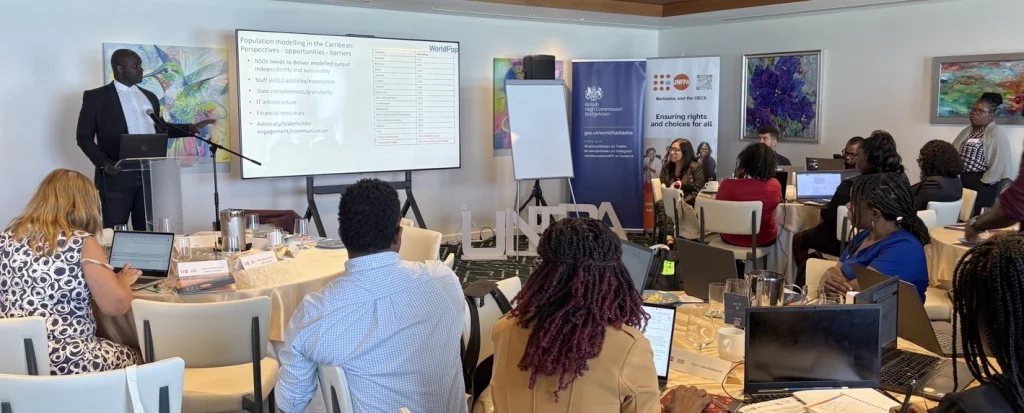
The workshop opened with remarks from the British High Commissioner, the Deputy Secretary-General of CARICOM, and the Permanent Secretary to the Ministry of Economic Affairs and Development for Barbados, all emphasising the importance of robust population data for the region’s future. For WorldPop, the event highlighted the value of collaborations that combine global expertise with national statistical leadership to produce the detailed, actionable data Caribbean countries need to plan for the years ahead.
Dr Armstrong Alexis, Deputy Secretary-General of CARICOM, highlighted the significance of standardised population data for regional planning and resilience, saying, “I am confident that the knowledge and skills gained during this workshop will enable member states to produce more precise, comparable, and relevant data, strengthening planning, resilience, and development outcomes for all citizens of our Caribbean community.”
Learn more
- DEGURBA Project (WorldPop)
- PopRF tool (GitHub)
- WorldPop Open Data
- WorldPop Free Learning Resources