WorldPop’s population data helps power decisions at a truly global scale. Our subnational population estimates are the default data used by UN agencies worldwide, feeding into systems that guide humanitarian response, development planning, and crisis management. They also underpin the DHIS2 health information system, used by more than 70 ministries of health and covering around 2.4 billion people.
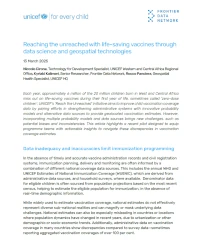
These data play a critical role in health and emergency response. Governments use WorldPop population maps to plan and deliver childhood vaccination programmes, ensuring vaccines reach the children who need them most. During the COVID-19 pandemic, WorldPop data formed the demographic foundation for influential models developed by Imperial College London and the University of Washington, which helped shape national lockdown decisions in the UK and the United States.
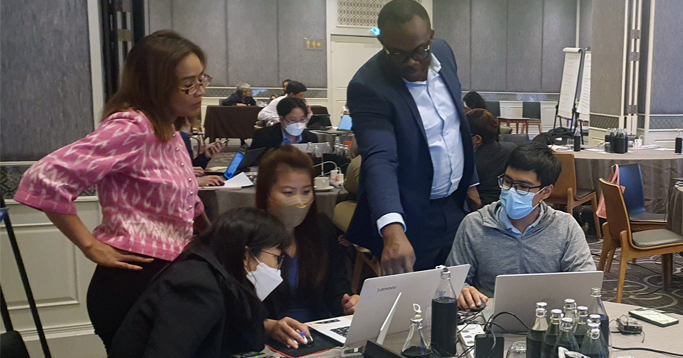
Beyond data production, WorldPop works closely with partners to build skills and long-term capacity. We design and deliver training and knowledge-sharing programmes with governments and international organisations, focusing on co-developing tools and approaches that can be sustainably adopted, owned, and used locally.
WorldPop is a founding member and core partner of the GRID3 programme, which supports better data for development, and serves as the global geospatial data analysis centre for Countdown to 2030, tracking progress in maternal, newborn, and child health. We have long-term partnerships with organisations including UNICEF, UNFPA, IOM, and FAO, and regularly support the work of OCHA, WHO, WFP, and the World Bank.
We also collaborate with leading technology and data providers, with active agreements in place with Google, Meta, Vodafone, and Planet, and partnerships with organisations such as ESRI, the German Space Agency, the UK Office for National Statistics, and the European Commission’s Joint Research Centre. Together, these partnerships help ensure population data is accurate, accessible, and used where it matters most.